
Technical Review Article | Open Access | Published 29th September 2026
Ultra-Deformable Transferosomes for Enhanced Transdermal Drug Delivery and Targeted Skin Therapy
Venkatesh Aditiyaa Narayanaa, Vanitha Sureshkumar*, Priya Palanisamy, Sambath Kumar
The Erode College of Pharmacy, Tamil Nādu, India. | EJPPS | 313 (2026)| https://doi.org/10.37521/ejpps31310
Abstract
The stratum corneum represents the principal barrier limiting dermal and transdermal delivery of several therapeutic agents, particularly hydrophilic drugs and macromolecules, resulting in poor skin penetration and reduced clinical efficacy. Transferosomes, a class of ultra-deformable lipid vesicles composed of phospholipids and edge activators, have emerged as an advanced nanocarrier system capable of overcoming this limitation. Owing to their high elasticity and stress-responsive membrane properties, transferosomes can reversibly deform and penetrate through intercellular lipid channels and narrow pores of the stratum corneum, primarily driven by trans-epidermal hydration gradients under non-occlusive conditions. This review summarizes the structural features, penetration mechanism, preparation methods, formulation requirements, and characterization parameters of transferosomes, with emphasis on thin-film hydration as a widely preferred technique for reproducible vesicle formation and high entrapment efficiency. In addition, recent formulation strategies including Quality by Design (QbD) approaches are highlighted for optimizing lipid-to-edge activator ratios to achieve stable and efficient systems. Therapeutic applications of transferosomes are discussed across diverse dermatological conditions including inflammatory disorders, fungal and bacterial infections, pain management, and skin cancers such as melanoma. Overall, transferosomal systems represent a promising platform for targeted skin therapy and improved patient-compliant treatment.
Keywords: Transferosomes, transdermal delivery, ultra-deformable vesicles, skin disorders, edge activators.
1. INTRODUCTION
The skin, the largest organ of the human body, serves as a primary protective barrier against environmental, chemical, and microbial exposure. It is commonly affected by infectious diseases including bacterial infections, fungal infections, and viral infections. In addition, chronic inflammatory skin disorders and skin cancers contribute substantially to healthcare utilization, resulting in millions of clinical visits and a major economic burden globally [1]. Importantly, skin diseases are also associated with significant psychological morbidity. Visible lesions and long-term disease progression often lead to stigma, reduced self-esteem, and impaired quality of life, with frequent reports of anxiety and depression. Conditions such as acne, alopecia areata, atopic dermatitis, psoriasis, and vitiligo are widely recognized for their social and emotional impact, particularly among adolescents and young adults [2,3].
Although topical therapy remains the preferred approach for many dermatological conditions due to convenience and reduced systemic exposure, effective transdermal delivery is frequently limited by the stratum corneum. This outermost layer restricts penetration of macromolecules and hydrophilic drugs, leading to poor drug permeation and suboptimal therapeutic outcomes [3]. To overcome this challenge, transferosomes have emerged as an advanced vesicular drug delivery system for enhanced skin transport. Transferosomes are ultra-deformable lipid vesicles composed of phospholipids (e.g., soy phosphatidylcholine) and edge activators such as Tween 80 or sodium cholate, which impart high elasticity to the bilayer membrane. This deformability allows transferosomes to traverse narrow intercellular pores of the stratum corneum under the influence of trans-epidermal hydration gradients [4]. Consequently, transferosomes improve drug flux, enable deeper dermal deposition, promote sustained release, enhance bioavailability, and avoid first-pass metabolism [4,5]. Their superior penetration compared to conventional liposomes highlights their relevance as a promising nanoencapsulation technique for transdermal applications [6].
Mechanistically, transferosomes migrate predominantly through intercellular lipid pathways by reversible deformation under non-occlusive conditions. Drug release occurs upon reaching the aqueous environment of the viable epidermis, facilitating absorption into dermal capillaries while minimizing burst release associated with rigid carriers [7]. Recent formulation development increasingly adopts Quality by Design (QbD) strategies, including Plackett–Burman screening and Box–Behnken modelling, to optimize lipid-to-edge activator ratios and ensure robust performance [8]. Furthermore, transferosome-based phytosomes enhance phytochemical bioavailability through phospholipid complexation, improving dermal delivery of complementary medicines [9].
Clinically relevant examples include insulin transferosomes (Transfersulin), corticosteroids, interferon-alpha, methotrexate, anaesthetics, and NSAIDs such as diclofenac/ketoprofen (Diractin, 2007), demonstrating improved efficacy with reduced systemic adverse effects [9,10]. Transferosome-loaded gels also enhance antifungal therapy, such as miconazole nitrate formulations showing improved permeation and efficacy compared to conventional creams [11]. In skin cancer management, including melanoma, transferosome gels provide a non-invasive strategy to enhance penetration, prolong residence time, reduce dosing frequency, and minimize side effects, with formulation parameters controlling vesicle size and retention [12]. Transferosomes-based nanocarriers play an important role in the management of various dermatological disorders. The potential applications of transferosomes in skin therapy are illustrated in Fig. 1.

2. Overview of Skin Barrier
The skin acts as primary barrier against pathogens, toxins, UV light, and trauma while regulating temperature, sensing touch, pain, and maintaining fluid balance. Highly adaptive with varying thickness across body areas, it comprises epidermis, dermis, and subcutaneous layers [13]. The epidermis, the outermost layer, provides a waterproof barrier and protection against water loss, infection, and ultraviolet damage. It contains multiple layers of cells, including melanocytes that produce pigment, Langerhans cells for immune defence, and Merkel cells for sensing pressure [14]. The dermis, rich in collagen, elastic fibres, vessels, nerves, and glands, provides strength, flexibility, sensation, thermoregulation, and immunity. Subcutaneous fat in connective tissue offers insulation, cushioning, and energy storage. Layer disorders or damage cause scars, keloids, burns, striae, autoimmune diseases, infections, or cancers, emphasizing skin protection [15]. The skin possesses multiple protective barriers that limit drug penetration and reduce the effectiveness of topical therapies. The major skin barriers involved in drug delivery are illustrated in Fig. 2.
The skin's three layers form a "tissue triad": an avascular epidermis that regenerates, a thin basement membrane zone (BMZ) anchoring it to the dermis, a vascular dermis and a top, fat-rich hypodermis [16]. The BMZ's four layers hemidesmosomes, lamina lucida, and type VII collagen fibrils prevent separation; damage here causes scarring instead of regeneration. This dynamic structure ensures barrier function, sensation, and adaptability, but disruptions lead to impaired healing or disease [16,17].

3. Drug Penetration Challenges
The skin provides an efficient barrier against percutaneous absorption, mainly due to the stratum corneum (SC), which contains alternating lipoidal and hydrophilic regions that restrict drug transport. The extent of absorption is largely governed by physico-chemical characteristics such as molecular weight and partition coefficient, while formulation vehicles influence drug release as well as drug–SC interactions; additionally, surfactants and penetration enhancers can modulate SC barrier function. Dosing conditions such as humidity, temperature, and occlusion further affect drug input rates and overall penetration efficiency [18].
However, most topically administered drugs are unable to effectively cross the SC, thereby necessitating enhancement strategies including chemical approaches (e.g., ethanol, fatty acids, and terpenes), physical techniques (e.g., iontophoresis, microneedles, and sonophoresis), and nanotechnological systems (e.g., liposomes and transferosomes) to improve dermal and transdermal delivery [19,20,21]. The SC remains a major obstacle because of its compact lipid packing, presence of tight junctions, and intrinsic protective/anti-inflammatory responses, all of which limit penetration; these challenges are increasingly addressed using nanocarriers and penetration-enhancing agents [22,25]. Although 3D-human skin equivalents (HSEs) are useful experimental models that mimic several skin features, they still lack complete native barrier functionality compared to real human skin [23]. Furthermore, differences in skin properties across body regions, age groups, pathological conditions, and environmental exposure necessitate tailored delivery systems for optimal performance [24,27]. Chemical penetration enhancers are particularly valuable as they can transiently increase permeability without causing significant irritation, primarily by influencing drug transport through molecular-level interactions within the SC [22,26]. Several physiological factors restrict the penetration of drugs through the skin, including the stratum corneum and lipid matrix. These drug penetration challenges are presented in Fig. 3.

4. Transferosomes and Their Structure
Transferosomes are ultra-deformable vesicular drug delivery systems developed to overcome the barrier properties of the stratum corneum and enhance transdermal drug transport. They were introduced as an advanced modification of conventional liposomes to improve skin penetration of both low and high molecular weight drugs [28]. These vesicles are primarily composed of phospholipids such as phosphatidylcholine combined with edge activators that impart flexibility to the lipid bilayer [29].
Structurally, transferosomes consist of an aqueous core enclosed by a highly elastic lipid bilayer, forming a stress-responsive supramolecular aggregate capable of reversible deformation under mechanical stress [30]. The unique interdependence between vesicle shape and membrane composition allows transferosomes to squeeze through skin pores several times smaller than their own diameter without vesicle rupture [31]. Penetration of transferosomes is driven mainly by a trans-epidermal osmotic gradient generated by water evaporation from the skin surface, enabling transport through intercellular or transcellular pathways while maintaining vesicle integrity and sustained drug release [32]. Transferosomes are ultra-deformable vesicular carriers composed of phospholipids and edge activators that enhance drug transport across the skin barrier. The structural components of transferosomes are shown in Fig. 4.

5. Transferosomes Mechanism of Action
Transferosomes penetrate the skin via their ultra-deformable phospholipid bilayer, made flexible by edge activators that destabilize lipids and allow squeezing through narrow intercellular pores of the stratum corneum [33]. An osmotic or hydration gradient under non-occlusive conditions drives vesicles from the dry surface toward deeper, more hydrated layers, widening intercellular pathways and enabling intact vesicles to carry drug into viable epidermis and dermis [34]. These self-optimizing vesicles interact with skin lipids, enhancing fluidity, promoting fusion or lipid exchange, and thus increasing drug partitioning and transdermal flux [35]. Transferosomes enhance transdermal drug delivery through their highly flexible membrane that allows them to squeeze through narrow pores of the skin. The mechanism of action of transferosomes is illustrated in Fig. 5.
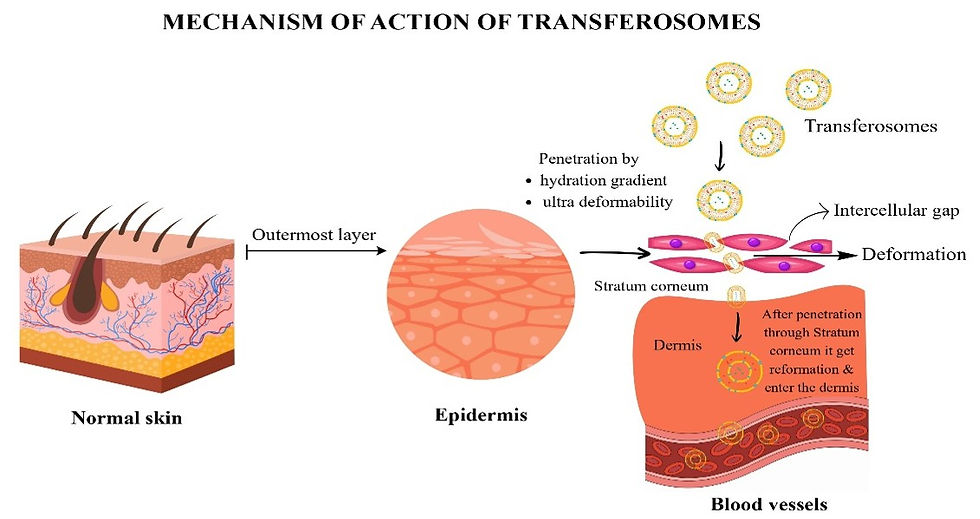
6. Method of Preparation
Various preparation techniques used for transferosome formulation are summarized in Table 1.
Table 1. Method of preparation and formulation of transferosomes.
METHOD | BRIEF STEP | TYPICAL APPLICATIONS | REFERENCES |
1.Thin-flim hydration (Rotary evaporation + sonication) | 1.Dissolve lipids + edge activator + drug in organic solvent. 2.Evaporate solvent to form thin lipid film. 3.Hydrate film with aqueous buffer. 4.Sonicate/extrude to adjust vesicle size. | Hydrophilic and Hydrophobic drugs, Proteins, Peptides, small molecules. | [36] |
2. Modified Hand shaking method | 1. Dissolve lipids + edge activator + drug in organic solvent. 2. Evaporate solvent manually while shaking to form thin film. 3. Hydrate with aqueous buffer. | Small scale lab studies and screening formulations | [37] |
3. Vortex/Sonication Method | 1. Suspending lipids + edge activator + drug in aqueous buffer. 2. Vortex mixture to form milky suspension. 3. Sonicate for uniform vesicle size. | Less efficient encapsulation and May require multiple cycles. Quick preparation for preliminary studies. | [37] |
4. suspension Homogenization | 1. Dissolve lipids + edge activator + drug in ethanol. 2. Add aqueous phase under stirring. 3. Sonicate and optionally perform freeze-thaw cycle for uniformity. | Peptide/protein drugs; improved stability formulations. | [36] |
5. Reverse phase evaporation/Ethanol injection | 1. Emulsify the lipid + edge activator + drug with aqueous phase (Reverse phase). or 2. Inject ethanolic lipid solution into aqueous buffer under stirring. 3. Remove solvent to form vesicles. | Drug sensitivity to shear; large-scale vesicle production. | [38] |
When all transferosome preparation methods are considered together, the thin film hydration method is overall the best and most reliable option. In simple terms, most methods help improve drug loading, make vesicles flexible, and enhance drug penetration through the skin. Some methods are easy and low-cost, while others give better drug entrapment and vesicle stability. However, common problems include the use of organic solvents, multiple preparation steps, need for special equipment, and difficulty in controlling vesicle size. Considering all these methods, thin film hydration gives a good balance of simplicity, reproducibility, uniform vesicle size, and high drug entrapment, which is why it is most widely used and preferred for transferosome formulation [36–38]. Several techniques have been developed for the preparation of transferosomes, including thin-film hydration, ethanol injection, vortex/sonication, and reverse-phase evaporation methods. These preparation methods are illustrated in Fig. 6.

7. Materials Required for the Preparation of Transferosomes:
The commonly used phospholipids, surfactants, and other materials employed in transferosome formulation are listed in Table 2.
Table 2. Commonly used materials for transferosomes [39,40].
Material | Examples | Purpose/Role |
Phospholipids | Soy phosphatidylcholine, Egg phosphatidylcholine | Form the basic lipid bilayer structure of transferosomal vesicles |
Edge Activators (Surfactants) | Span 60, Span 80, Tween 80, Sodium cholate, Sodium deoxycholate | Provide elasticity and deformability to vesicles, enabling penetration through skin pores |
Drug | Hydrophilic or lipophilic drug (e.g., insulin, dapsone, quercetin) | Active pharmaceutical ingredient to be delivered transdermally |
Organic Solvents | Chloroform, Methanol, Ethanol | Used for dissolving lipids during thin film formation preparation |
Aqueous Phase | Phosphate buffer saline (PBS), Distilled water | Hydration medium for lipid film rehydration and drug solubilization |
Cholesterol (Optional) | Cholesterol | Enhances vesicle stability and rigidity of the lipid bilayer |
Antioxidants/Preservatives (Optional) | Butylated hydroxytoluene (BHT), Methyl paraben | Prevent lipid oxidation and inhibit microbial growth during storage |
8. Characterization of the Transferosomes
Several established analytical techniques evaluate critical parameters of transferosomes, including vesicle morphology, size and distribution, polydispersity index (PDI), zeta potential, vesicle density per cubic millimetre, entrapment efficiency, elasticity, and dermal permeation. These assessments ensure formulation stability, batch reproducibility, and enhanced transdermal performance during optimization [41,42,43].
8.1. Parameters
Vesicle size serves as a critical parameter in transferosome formulation, enabling batch-to-batch consistency, scale-up reliability, and physical stability assessment during storage [44].
Size Stability Factors: Smaller vesicles (<40 nm) risk fusion due to high bilayer curvature, while larger, electroneutral ones aggregate via van der Waals forces from increased membrane contact. Size directly impacts drug encapsulation: lipophilic/amphiphilic agents favour high lipid-to-core ratios, whereas hydrophilic compounds require expanded aqueous cores [45].
Measurement Techniques: Dynamic light scattering (DLS) or photon correlation spectroscopy (PCS) quantifies vesicle diameter (typically 70-300 nm), with samples diluted in saline or water, filtered (0.2 μm), and measured in triplicate using a Malvern Zetasizer. Transmission electron microscopy (TEM) visualizes morphology and structural integrity, complemented by phase contrast microscopy; zeta potential employs electrophoretic mobility on the same instrument [44-46].
Performance Metrics: Vesicle count per cubic mm, entrapment efficiency (%EE), and deformability degree provide quantitative insights essential for transferosome optimization, ensuring reproducible composition, high drug loading, and superior skin permeation.
Vesicle Quantification: Unsonicated transferosomal suspensions diluted five-fold in 0.9% sodium chloride to reduce viscosity and enable clear visualization. A haemocytometer chamber loaded with this sample allows direct counting of vesicles (>100 nm) under optical microscopy across multiple small squares. The total vesicle density per cubic mm calculates precisely as

where 4000 accounts for chamber depth and volume conversion, facilitating process variable refinement such as lipid: surfactant ratios [44,47,48].
Entrapment Efficiency: %EE quantifies drug retention post-separation of free drug via mini-column centrifugation or ultracentrifugation (12,000-20,000 rpm, 30-60 min). Direct method disrupts pelleted vesicles with solvents such as methanol or Triton X-100, followed by 0.22-0.45 μm filtration and API-specific analysis (UV-Vis at λ_max or RP-HPLC with validated linearity); indirect method assays supernatant free drug concentration [49,50,51].
%EE =------------------------------------- x 100 (Direct) or %EE =---------------------------------------------- x 100 (Indirect)
Deformability Assessment:
This hallmark property drives transferosome efficacy; suspensions extrude (5 min, low pressure) through polycarbonate membranes with defined pores (50-400 nm, e.g., 100-200 nm for skin mimicry). Pre- and post-extrusion DLS (Malvern Zetasizer) confirms size retention despite narrow barriers.

integrates extrusion rate J (mL/min), vesicle radius rv (nm), and pore radius rp (nm); higher D (>10-50x conventional liposomes) validates ultra-flexibility for stratum corneum transit under hydration gradients [44,45,46].
9. Permeation Evaluation
In vitro drug release tests show how transferosomes release drugs over time, helping optimize formulations for better skin delivery compared to plain drugs or gels. Skin permeation studies measure drug movement through skin models, while stability tests check if vesicles hold up under storage. These methods use simple laboratory setups such as Franz cells and follow standard guidelines.
Drug Release Test
Transferosomes release drugs steadily in Franz diffusion cells at skin temperature (32°C ± 1°C), using a 0.45 μm membrane soaked in phosphate buffer. Samples (1 mL) are withdrawn at intervals such as 0.5-6 hours, replaced with fresh buffer to mimic real conditions and analysed by UV, HPLC, or HPTLC. Examples: celecoxib transferosomes released 75% in 6 hours (vs. 45% commercial gel), ketoconazole showed 40% burst, lidocaine over 80% [44,46,52,53].
Skin Permeation Test
This measures drug flux (μg/cm²/h) through skin substitutes since human skin is hard to get; pig skin works best (closest to human), followed by rat/mouse or synthetic Strat-M® membranes. Franz cells at 37°C hold skin stratum corneum up, with the formulation added to donor side (non-occluded), and receptor samples withdrawn over time for HPLC analysis. Transferosomes boost permeation 2-3x by deforming through skin pores [54-57].
Stability Testing
Transferosomes are stored in sealed amber vials and vesicle size (DLS) and structure (TEM) checked over time per ICH rules: long-term at 25°C/60% RH or 30°C/65% RH (12 months), accelerated at 40°C/75% RH (6 months), fridge at 5°C (12 months). Failure means that specifications are not met, such as size changes or leaks; low temp/light protection cuts oxidation [44-57].
10. Therapeutic Applications and Current Research of Transferosomes:
Transferosomes target skin cancers such as actinic keratosis, basal cell carcinoma, squamous cell carcinoma, melanoma, and Kaposi's sarcoma via enhanced transdermal penetration of anticancer agents. Lycorine transferosomes with cell-penetrating peptides demonstrated potent anti-squamous cell carcinoma effects in vitro/in vivo by improving tumour uptake [58]. Genistein transferosomes effectively delivered to melanoma sites with high encapsulation and sustained release [59].
Osteoarthritis pain management employs ketoprofen transferosomes (Diractin®), showing superior efficacy over placebo in phase III trials with reduced adverse events. Hydrocortisone/dexamethasone transferosomes treat inflammatory dermatoses by providing active transdermal delivery and better risk-benefit profiles. Hyaluronan-modified indomethacin transferosomes enhanced anti-arthritic effects through improved retention [36,60,61]. Diabetes benefits from insulin transferosomes enabling non-invasive delivery via osmotic gradients, bypassing GI degradation [62]. Onychomycosis treatment uses tavaborole/hematoporphyrin transferosomes for deep nail penetration in chemo-photodynamic therapy [63]. Griseofulvin transferosomes proved efficacious against dermatophytosis and vulvovaginal candidiasis in animal models [64].
Transferosomal anti-inflammatories/growth factors address atopic dermatitis and alopeciafor sustained release. Ocular disorders and osteoporosis utilize transferosomes for localized delivery minimizing systemic side effects [36,65].
11. Completed or Advanced Clinical Status
Diractin® (ketoprofen transferosomes): Completed Phase III trials for osteoarthritis knee pain (6-week superiority over placebo), but commercialization discontinued due to regulatory/market factors—not failed efficacy [66]. Ongoing/Preclinical Pipeline Skin cancers (melanoma, SCC): Preclinical/in vitro success (lycroine, genistein transferosomes); no Phase II/III reported [58,59]. Diabetes (insulin transferosomes): Preclinical; human trials limited by stability/permeation challenges. Infections (antifungals, antivirals): Animal models/preclinical only. Pain/inflammation (capsaicin, corticosteroids): Early clinical; no approvals [67].
11.1. Anti-inflammatory and Analgesic Agents
Non-steroidal anti-inflammatory drugs (NSAIDs) represent a major class of therapeutics incorporated into transferosomal and nanoparticle formulations for enhanced transdermal delivery. This category includes diclofenac sodium, diclofenac diethylamine, indomethacin, ibuprofen, ketoprofen, naproxen, piroxicam, aceclofenac, meloxicam, flurbiprofen, celecoxib, etoricoxib, and capsaicin. These agents are formulated into transferosomal systems to achieve enhanced transdermal anti-inflammatory and analgesic delivery while maintaining improved skin retention and reducing systemic exposure [67-84].
11.2. Corticosteroid Formulations
Corticosteroids including hydrocortisone, hydrocortisone acetate, betamethasone, betamethasone valerate, clobetasol propionate, mometasone furoate, triamcinolone acetonide, and prednisolone have been extensively studied in transferosomal delivery systems. These lipid-based nanocarriers facilitate deep skin targeting while significantly reducing systemic exposure, a critical concern with corticosteroid therapy due to potential systemic adverse effects. Enhanced therapeutic efficacy in inflammatory skin conditions is achieved through improved dermal penetration and localized drug deposition, allowing lower doses to achieve therapeutic endpoints while maintaining safety profiles [84-88].
11.3. Antifungal Agents
Transferosomal formulations of antifungal agents including ketoconazole, fluconazole, itraconazole, clotrimazole, miconazole nitrate, econazole, amphotericin B, and nystatin demonstrate improved dermal retention and enhanced antifungal efficacy. The nanoparticulate approach provides superior skin permeation compared to conventional topical formulations, enabling better bioavailability at fungal infection sites. This enhanced delivery is particularly important for systemic antifungal agents such as fluconazole and itraconazole, which can now be administered transdermally for conditions such as fungal infections and dermatophyte-related skin disorders [89-97].
11.4. Antibacterial and Antibiotic Agents
A comprehensive array of antibacterial agents has been formulated into transferosomal systems, including fluoroquinolones (ciprofloxacin, ofloxacin, norfloxacin, levofloxacin), tetracyclines (tetracycline, doxycycline), macrolides (erythromycin, clindamycin), and other antimicrobials (rifampicin, metronidazole, gentamicin, vancomycin). These formulations enhance topical antibacterial activity with targeted delivery to infection sites while reducing systemic antibiotic burden. The nanoparticulate delivery approach is particularly valuable in addressing antibiotic resistance by achieving high local concentrations at infected tissues, potentially reducing the development of resistant organisms through lower systemic exposure [98-106].
11.5. Antiviral Drugs
Antiviral agents including acyclovir, zidovudine, lamivudine, stavudine, efavirenz, and ritonavir represent an important category for transferosomal encapsulation. These formulations achieve improved skin permeation and antiviral delivery with enhanced bioavailability and localized therapeutic action. For cutaneous viral infections such as herpes simplex virus and varicella zoster virus, transdermal delivery of antivirals provides superior efficacy compared to conventional topical formulations, while antiretroviral agents such as zidovudine and ritonavir benefit from improved oral bioavailability through transdermal administration [106-114].
11.6. Anticancer Drugs
Transferosomal and nanoparticle formulations of anticancer agents including methotrexate, 5-fluorouracil, paclitaxel, docetaxel, doxorubicin, tamoxifen, curcumin, and resveratrol enable localized cancer therapy with significantly reduced systemic toxicity. These formulations achieve improved cellular uptake and enhanced therapeutic efficacy specifically against dermal and subcutaneous tumours. The approach allows for sustained and controlled release of cytotoxic agents directly to tumour sites, minimizing damage to healthy tissues and reducing the severe systemic adverse effects associated with conventional intravenous chemotherapy [115-118].
11.7. Anti-psoriatic and Skin Disorder Agents
Specialized agents for psoriasis and inflammatory skin disorders, including methotrexate, cyclosporine A, calcipotriol, tazarotene, and coal tar actives, demonstrate targeted delivery capabilities through transferosomal formulations. These systems provide deep skin layer penetration and sustained therapeutic effects in managing psoriasis and related inflammatory skin conditions. The localized delivery approach enables achievement of therapeutic endpoints with reduced systemic exposure, particularly important for agents like methotrexate and cyclosporine A that carry significant systemic toxicity risks [119,120].
11.8. Anti-acne Medications
Anti-acne therapeutics including tretinoin, isotretinoin, adapalene, benzoyl peroxide, and clindamycin phosphate benefit from enhanced follicular targeting through transferosomal delivery systems. These formulations improve acne therapy efficacy while reducing irritation through controlled transdermal delivery. By targeting sebaceous follicles and enabling sustained release within follicular structures, transferosomal formulations address the inherent problem of poor bioavailability and high irritation potential of conventional acne medications [121,122].
11.9. Antihypertensive and Cardiovascular Agents
Cardiovascular agents including propranolol HCl, atenolol, metoprolol, captopril, and nifedipine represent a clinically important category for transdermal systemic delivery via transferosomal systems. These formulations enable non-invasive cardiovascular therapy with improved patient compliance compared to oral and parenteral routes. The transdermal approach provides sustained drug release, reduces dosing frequency, and improves therapeutic drug levels in patients with swallowing difficulties or poor oral bioavailability [123].
11.10. Antidiabetic Drugs
Antidiabetic agents including insulin, metformin, glibenclamide, and repaglinide have been incorporated into transferosomal formulations to achieve improved transdermal systemic therapy. The nanoparticulate delivery approach significantly reduces the need for injections and enhances bioavailability of antidiabetic agents. For insulin in particular, transdermal delivery through nanoparticles represents a major advance in reducing patient burden associated with multiple daily injections while maintaining glycaemic control [124].
11.11. Miscellaneous Therapeutic Agents
A diverse range of additional drugs including lidocaine, timolol maleate, minoxidil, finasteride, oestradiol, and testosterone are formulated into transferosomal systems for dermal, follicular, or systemic delivery [30,31]. Lidocaine nanoparticles provide enhanced local anaesthetic delivery with improved penetration and extended duration of action. Minoxidil transferosomes enable enhanced hair follicle targeting for androgenetic alopecia management. Hormone replacement formulations of oestradiol and testosterone via lipid nanocarriers provide transdermal systemic delivery with improved bioavailability and patient compliance [125-128].
12. Future Perspectives:
Future advancements in transferosome-based drug delivery are expected to accelerate their clinical translation, particularly in dermatological oncology, where their ultra-deformable structure enables enhanced skin penetration, localized drug deposition, and improved therapeutic outcomes in skin cancer management with reduced systemic toxicity [129]. Continued research will also focus on addressing key formulation challenges such as physical stability, drug leakage, and large-scale manufacturing limitations, especially for antifungal transferosomal systems [130]. Hybrid vesicular technologies, including transethosomes and ethosomes/NLC hybrid carriers, represent a promising next-generation strategy to further improve permeation and therapeutic performance in chronic skin disorders [131]. In parallel, incorporation of transferosomes into advanced topical platforms such as hydrogels may support sustained drug release and improved patient adherence for long-term inflammatory conditions [132]. Moreover, microneedle-assisted transferosome delivery is emerging as a highly effective approach to overcome the stratum corneum barrier and enhance transdermal transport, expanding the scope of transferosomes for both localized and systemic drug delivery [133]. Collectively, these innovations strengthen the position of transferosomes as a versatile and scalable nanocarrier platform for future precision therapy in skin-targeted and transdermal applications [129–133].
CONCLUSION
Transferosomes represent an advanced ultra-deformable vesicular drug delivery system developed to overcome the major limitation of dermal and transdermal therapy imposed by the stratum corneum barrier, particularly for hydrophilic drugs and macromolecules that exhibit poor skin penetration and reduced therapeutic efficacy. Composed mainly of phospholipids and edge activators, transferosomes possess high elasticity and stress-responsive membrane properties that enable reversible deformation and passage through narrow intercellular lipid channels and pores under the influence of trans-epidermal hydration gradients in non-occlusive conditions. This unique mechanism supports intact vesicle penetration into deeper skin layers, improving drug flux, enhancing dermal deposition, prolonging residence time, and providing sustained release while minimizing systemic exposure and adverse effects. Among preparation methods, thin-film hydration is highlighted as the most preferred and reproducible approach due to its balance of simplicity, high entrapment efficiency, and ability to yield stable vesicles, though challenges such as organic solvent usage, multiple processing steps, and vesicle size control remain. Comprehensive characterization parameters including vesicle size, PDI, zeta potential, entrapment efficiency, and deformability index are essential to ensure stability and performance, while permeation and release studies using Franz diffusion cells validate enhanced delivery compared to conventional formulations. Overall, transferosome-based formulations demonstrate broad therapeutic potential across inflammatory disorders, infections, pain management, and skin cancers such as melanoma, supporting their role as a promising targeted nanocarrier platform for improved and patient-compliant skin therapy.
Author Contributions
Venkatesh Aditiyaa narayanaa and Vanitha Sureshkumar contributed to the conception and design of the study. A.N. Venkatesh carried out the literature survey, data collection, and preparation of the initial draft of the manuscript. S. Vanitha supervised the study and contributed to the critical revision of the manuscript. Priya Palanisamy assisted in data analysis, manuscript editing, and formatting. R. Sambathkumar contributed to technical guidance and review of the scientific content. All authors reviewed, read, and approved the final version of the manuscript. The authors declare that no paper mill was used and that all data and materials presented in this work were generated and prepared by the authors.
Funding: The authors declare that this research received no external funding.
Data Availability: All data generated or analyzed during this study are included in this published article. Additional information related to the study is available from the corresponding author upon reasonable request.
Supplementary file statement: This study does not include gel electrophoresis or blot images; therefore, uncropped gel/blot images are not applicable.
Declarations
Conflict of Interest: The authors declare that they have no conflict of interest.
Ethical Approval: This article does not contain any studies involving human participants or animals performed by any of the authors.
Consent to Participate: Not applicable.
Consent for Publication: Not applicable.
Clinical Trial Registration: Not applicable.
Additional Statement: The authors confirm that no paper mill was used in the preparation of this manuscript and that all data were generated and analyzed by the authors.
References
01. Dawson AL, Dellavalle RP, Elston DM. Infectious skin diseases: a review and needs assessment. Dermatol Clin. 2012 Jan;30(1):141-51, ix-x. Doi: 10.1016/j.det.2011.08.003. Epub 2011 Oct 21. PMID: 22117875.
02. Yakupu A, Aimaier R, Yuan B, Chen B, Cheng J, Zhao Y, Peng Y, Dong J, Lu S. The burden of skin and subcutaneous diseases: findings from the global burden of disease study 2019. Front Public Health. 2023 Apr 17; 11:1145513. doi:10.3389/fpubh.2023.1145513. PMID:37139398.
03. Baskaran N, Arunima A, Shah S, Narang T, Kumaran MS. Psychological morbidity in chronic dermatological disorders: a review. Indian Dermatol Online J. 2025 May–Jun;16(3):381–388. doi: 10.4103/idoj.idoj_458_24. PMID:40395584.
04. Chaurasiya P, Ganju E, Upmanyu N, Ray SK, Jain P. Transfersomes: a novel technique for transdermal drug delivery. J Drug Deliv Ther. 2019 Jan 15;9(1):279–285. doi:10.22270/jddt. v9i1.2198.
05. Rajan R, Jose S, Mukund VPB, Vasudevan DT. Transferosomes – a vesicular transdermal delivery system for enhanced drug permeation. J Adv Pharm Technol Res. 2011 Jul–Sep;2(3):138–143. doi:10.4103/2231-4040.85534. PMID:22171287.
06. Opatha SAT, Titapiwatanakun V, Chutoprapat R. Transfersomes: a promising nanoencapsulation technique for transdermal drug delivery. Pharmaceutics. 2020 Sep 9;12(9):855. doi:10.3390/pharmaceutics12090855. PMID:32916782.
07. Matharoo N, Mohd H, Michniak-Kohn B. Transferosomes as a transdermal drug delivery system: dermal kinetics and recent developments. WIREs Nanomed Nanobiotechnol. 2023;15(6): e1918. doi:10.1002/wnan.1918. Epub 2023 Jun 22. PMID:37531514.
08. Fernández-García R, Lalatsa A, Statts L, Bolás-Fernández F, Ballesteros MP, Serrano DR. Transferosomes as nanocarriers for drugs across the skin: quality by design from lab to industrial scale. Int J Pharm. 2020 Jan 5; 573:118817. doi: 10.1016/j.ijpharm.2019.118817. Epub 2019 Oct 31. PMID:31678520.
09. Vemula P, Sailaja AK. Transferosomes-A novel carrier for drug delivery. Dermatol Dermatitis. 2023 Nov;8(5):132. doi:10.31579/2578-8949/132. Epub 2023 Nov 27.
10. Chen R-P, Chavda VP, Patel AB, Chen Z-S. Phytochemical delivery through transferosome (phytosome): an advanced transdermal drug delivery for complementary medicines. Drug Deliv Transl Res. 2021 Jun;11(3):819–834. doi:10.1007/s13346-020-00819-9. Epub 2020 Nov 18. PMID:33264433.
11. Qushawy M, Nasr A, Abd-Alhaseeb M, Swidan S. Design, optimization and characterization of a transfersomal gel using miconazole nitrate for the treatment of Candida skin infections. Pharmaceutics. 2018 Feb 23;10(1):26. doi:10.3390/pharmaceutics10010026. Epub 2018 Feb 23. PMID:29495458.12. Repka MA, Langley N, DiNunzio JJM, Technology, Design DP. Melt extrusion. Springer. 2013;4(5).
12. Mohaddish, Jilani M, Rehman U, Ramaiah R, Hani U, Gupta G, Goh KW, Kesharwani P. Recent advances in the clinical application of transferosomes for skin cancer management. Colloids Surf B Biointerfaces. 2025 Oct; 254:114877. doi: 10.1016/j.colsurfb.2025.114877. Epub 2025 Jun 11. PMID: 40516301.
13. Lopez-Ojeda W, Pandey A, Alhajj M, Oakley AM. Anatomy, Skin (Integument). 2022 Oct 17. In: StatPearls. Treasure Island (FL): StatPearls Publishing; 2025 Jan–. PMID: 28723009.
14. Agarwal S, Krishnamurthy K. Histology, Skin. 2023 May 1. In: StatPearls [Internet]. Treasure Island (FL): StatPearls Publishing; 2025 Jan–. PMID: 30726010.
15. Brown TM, Krishnamurthy K. Histology, Dermis. 2022 Nov 14. In: StatPearls [Internet]. Treasure Island (FL): StatPearls Publishing; 2025 Jan–. PMID: 30570967.
16. Tsai CL, Changchien CY, Chen Y, Chang HH, Tsai WC, Wang YW, Chou KC, Chiang MH, Tsai YL, Tsai HC, Wang CY, Shen MS, Cheng LT, Lin HY, Yang TB, Chian CF. Accelerated Wound Healing and Keratinocyte Proliferation through PI3K/Akt/pS6 and VEGFR2 Signaling by Topical Use of Pleural Fluid. Cells. 2022 Feb 26;11(5):817. doi: 10.3390/cells11050817. PMID: 35269438; PMCID: PMC8909204.
17. Milner SM. Skin Anatomy. Eplasty. 2023 Jun 15;23:QA8. PMID: 37519927; PMCID: PMC10373447.
18. Wiechers JW. The barrier function of the skin in relation to percutaneous absorption of drugs. Pharm Weekbl Sci. 1989 Dec 15;11(6):185-98. doi: 10.1007/BF01959410. PMID: 2694089.
19. Trommer H, Neubert RH. Overcoming the stratum corneum: the modulation of skin penetration. A review. Skin Pharmacol Physiol. 2006;19(2):106-21. doi: 10.1159/000091978. Epub 2006 May 9. PMID: 16685150.
20. Bakhrushina EO, Shumkova MM, Avdonina YV, Ananian AA, Babazadeh M, Pouya G, Grikh VV, Zubareva IM, Kosenkova SI, Krasnyuk II Jr, Krasnyuk II. Transdermal Drug Delivery Systems: Methods for Enhancing Skin Permeability and Their Evaluation. Pharmaceutics. 2025 Jul 20;17(7):936. doi: 10.3390/pharmaceutics17070936. PMID: 40733144; PMCID: PMC12300492.
21. Phatale V, Vaiphei KK, Jha S, Patil D, Agrawal M, Alexander A. Overcoming skin barriers through advanced transdermal drug delivery approaches. J Control Release. 2022 Nov; 351:361-380. doi: 10.1016/j.jconrel.2022.09.025. Epub 2022 Sep 24. PMID: 36169040.
22. Sim YS, Wong LC, Yeoh SC, Almashhadani A, Alrimawi BH, Goh CF. Skin penetration enhancers: Mechanistic understanding and their selection for formulation and design. Drug Deliv Transl Res. 2025 Nov;15(11):3864-3898. doi: 10.1007/s13346-025-01809-9. Epub 2025 Feb 21. PMID: 39982640.
23. Bouwstra JA, Helder RWJ, El Ghalbzouri A. Human skin equivalents: Impaired barrier function in relation to the lipid and protein properties of the stratum corneum. Adv Drug Deliv Rev. 2021 Aug; 175:113802. doi: 10.1016/j.addr.2021.05.012. Epub 2021 May 18. PMID: 34015420.
24. Brito S, Baek M, Bin BH. Skin Structure, Physiology, and Pathology in Topical and Transdermal Drug Delivery. Pharmaceutics. 2024 Oct 31;16(11):1403. doi: 10.3390/pharmaceutics16111403. PMID: 39598527; PMCID: PMC11597055.
25. Haque T, Talukder MMU. Chemical Enhancer: A Simplistic Way to Modulate Barrier Function of the Stratum Corneum. Adv Pharm Bull. 2018 Jun;8(2):169-179. doi: 10.15171/apb.2018.021. Epub 2018 Jun 19. PMID: 30023318; PMCID: PMC6046426.
26. Supe S, Takudage P. Methods for evaluating penetration of drug into the skin: A review. Skin Res Technol. 2021 May;27(3):299-308. doi: 10.1111/srt.12968. Epub 2020 Oct 23. PMID: 33095948.
27. Gorzelanny C, Mess C, Schneider SW, Huck V, Brandner JM. Skin Barriers in Dermal Drug Delivery: Which Barriers Have to Be Overcome and How Can We Measure Them? Pharmaceutics. 2020 Jul 20;12(7):684. doi: 10.3390/pharmaceutics12070684. PMID: 32698388; PMCID: PMC7407329.
28. Medhi J, Thalluri C, Vasam M, Bukke SPN. The future of vesicular drug delivery: transferosomes in therapeutic advancement-applications, innovations and challenges. Biomed Eng Online. 2025 Dec 2;25(1):1. doi: 10.1186/s12938-025-01490-6. PMID: 41331612; PMCID: PMC12777116.
29. Rai S, Pandey V, Rai G. Transfersomes as versatile and flexible nano-vesicular carriers in skin cancer therapy: the state of the art. Nano Rev Exp. 2017 Jun 7;8(1):1325708. doi: 10.1080/20022727.2017.1325708. PMID: 30410704; PMCID: PMC6167026.30. Swarbrick J. Encyclopedia of Pharmaceutical Technology, pdf.
30. Souto EB, Macedo AS, Dias-Ferreira J, Cano A, Zielińska A, Matos CM. Elastic and Ultradeformable Liposomes for Transdermal Delivery of Active Pharmaceutical Ingredients (APIs). Int J Mol Sci. 2021 Sep 9;22(18):9743. doi: 10.3390/ijms22189743. PMID: 34575907; PMCID: PMC8472566.
31. Shafi S, Swami S, Waghmare P, Gadhave A, Damane M. Transferosomes: a next-generation ultra-deformable vesicular system—structure, mechanism, and future prospects. Asian Journal of Pharmaceutical Research and Development. 2024;12(1):1–12.
32. Khamkat P, Barik V, Mohapatra S, Karati D, Mukherjee S. Current Approaches on Transfersomal Patch: A Noninvasive Innovative Booster for Improved Transdermal Drug Delivery. Curr Pharm Biotechnol. 2025;26(13):2127-2140. doi: 10.2174/0113892010315069240805074205. PMID: 39185641.
33. Deng P., Masoud R.E., Alamoudi W.M., Zakaria M.Y. Employment of PEGylated ultra-deformable transferosomes for transdermal delivery of tapentadol with boosted bioavailability and analgesic activity. International Journal of Pharmaceutics. 2022; 628:122274. doi: 10.1016/j.ijpharm.2022.122274
34. Sudhakar K, Fuloria S, Subramaniyan V, Sathasivam KV, Azad AK, Swain SS, Sekar M, Karupiah S, Porwal O, Sahoo A, Meenakshi DU, Sharma VK, Jain S, Charyulu RN, Fuloria NK. Ultraflexible Liposome Nanocargo as a Dermal and Transdermal Drug Delivery System. Nanomaterials (Basel). 2021 Sep 29;11(10):2557. doi: 10.3390/nano11102557. PMID: 34685005; PMCID: PMC8537378.
35. Cevc G, Gebauer D. Hydration-driven transport of deformable lipid vesicles through fine pores and the skin barrier. Biochimica et Biophysica Acta (BBA) – Biomembranes. 2001;1511(2):156–167.
36. Pahwa R., Pal S., Saroha K., Waliyan P., Kumar M. Transferosomes: Unique vesicular carriers for effective transdermal delivery. Journal of Applied Pharmaceutical Science. 2021;11(5):1–8. doi:10.7324/JAPS.2021.110501 — review of transferosomes mechanisms and applications in transdermal delivery.
37. Mishra N, Bhattacharya V, Alagusundaram M. Transferosomes: The effective targeted drug delivery system an overview. Pharmacology, Nutrition and Research. 2022;13(Suppl 8):548. doi:10.47750/pnr.2022.13. S08.548.
38. Malakar J, Sen SO, Nayak AK, Sen KK. Formulation, optimization and evaluation of transferosomal gel for transdermal insulin delivery. Journal of Pharmaceutical Investigation. 2012;42(1):27–36.
39.Duangjit, S.; Opanasopit, P.; Rojanarata, T.; Ngawhirunpat, T. Characterization and in vitro skin permeation of meloxicam-loaded Liposomes vers us Transfersomes. J. Drug Deliv. 2010, 2011, 1 9.
40. Aggarwal, N.; Goindi, S. Preparation and evaluation of antifungal efficacy of griseofulvin loaded deformable membrane vesicles in optimized guinea pig model of Microsporum canis Dermatophytosis. Int. J. Pharm. 2012, 437, 277 287.
41. Modi, C.; Bharadia, P. Transfersomes: New dominants for transdermal drug delivery. Am. J. PharmTech. Res. 2012, 2, 71–91.
42. Vinod, K.R.; Kumar, M.S.; Anbazhagan, S.; Sandhya, S.; Saikumar, P.; Rohit, R.T.; Banji, D. Critical issues related to transfersomes-novel vesicular system. Acta Sci. Pol. Technol. Aliment. 2012, 11, 67–82.
43. Ascenso, A.; Batista, C.; Cardoso, P.; Mendes, T.; Praça, F.G.; Bentley, M.V.L.B.; Raposo, S.; Simões, S. Development, characterization, and skin delivery studies of related ultradeformable vesicles: Transfersomes, ethosomes, and transethosomes. Int. J. Nanomed. 2015, 10, 5837–5851. [CrossRef]
44. Verma DD, Verma S, Blume G, Fahr A. Particle size of liposomes influences dermal delivery of substances into skin. Int J Pharm. 2003 Jun 4;258(1-2):141-51. doi: 10.1016/s0378-5173(03)00183-2. PMID: 12753761.
45. Cevc, G. Transfersomes, liposomes and other lipid suspensions on the skin: Permeation enhancement, vesicle penetration, and transdermal drug delivery. Crit. Rev. Ther. Drug Carr. Syst. 1996, 13, 257–388. [CrossRef]
46. Jiang, T.; Wang, T.; Li, T.; Ma, Y.; Shen, S.; He, B.; Mo, R. Enhanced transdermal drug delivery by transfersome-embedded oligopeptide hydrogel for topical chemotherapy of melanoma. ACS Nano 2018, 12, 9693–9701. [CrossRef]
47. Jain, A.K.; Kumar, F. Transfersomes: Ultradeformable vesicles for transdermal drug delivery. Asian J. Biomater. Res. 2017, 3, 1–13.
48. Chauhan, P.; Tyagi, B.K. Herbal novel drug delivery systems and transfersomes. J. Drug Deliv. Ther. 2018, 8, 162–168. [CrossRef]
49. Fang JY, Hwang TL, Huang YL, Fang CL. Enhancement of the transdermal delivery of catechins by liposomes incorporating anionic surfactants and ethanol. Int J Pharm. 2006;310(1‑2):131–8. doi: 10.1016/j.ijpharm.2005.12.004.
50. Ahad, A.; Al-Saleh, A.A.; Al-Mohizea, A.M.; Al-Jenoobi, F.I.; Raish, M.; Yassin, A.E.B.; Alam, M.A. Formulation and characterization of novel soft nanovesicles for enhanced transdermal delivery of eprosartan mesylate. Saudi Pharm. J. 2017, 25, 1040–1046 [CrossRef].
51. Bnyan, R.; Khan, I.; Ehtezazi, T.; Saleem, I.; Gordon, S.; O’Neill, F.; Roberts, M. Formulation and optimisation of novel transfersomes for sustained release of local anaesthetic. J. Pharm. Pharmacol. 2019, 71, 1508–1519.
52. Singh, S.; Verma, D.; Mirza, M.A.; Das, A.K.; Dudeja, M.; Anwer, M.K.; Sultana, Y.; Talegaonkar, S.; Iqbal, Z.; Mukharjee, A. Development and optimization of ketoconazole loaded nano-transfersomal gel for vaginal delivery using Box-Behnken design: In vitro, ex vivo characterization and antimicrobial evaluation. J. Drug Deliv. Sci. Technol. 2017, 39, 95–103. [CrossRef]
53. Omar, M.M.; Hasan, O.A.; El Sisi, A.M. Preparation and optimization of lidocaine transferosomal gel containing permeation enhancers: Apromising approach for enhancement of skin permeation. Int. J. Nanomed. 2019, 14, 1551–1562. [CrossRef]
54. El Sayyad, M.K.; Zaky, A.A.; Samy, A.M. Fabrication and Characterization of Sildenafil Citrate Loaded Transfersomes as a Carrier for Transdermal Drug Delivery. Pharm. Pharmacol. Int. J. 2017, 5, 1–10. [CrossRef]
55. Ruela, A.L.M.; Perissinato, A.G.; Lino, M.E.D.S.; Mudrik, P.S.; Pereira, G.R. Evaluation of skin absorption of drugs from topical and transdermal formulations. Braz. J. Pharm. Sci. 2016, 52, 527–544. [CrossRef]
56. El Maghraby, G.M.; Barry, B.W.;Williams, A.C. Liposomes and skin: From drug delivery to model membranes. Eur. J. Pharm. Sci. 2008, 34, 203–222. [CrossRef] [PubMed]
57. Haq, A.; Goodyear, B.; Ameen, D.; Joshi, V.; Michniak-Kohn, B.B. Strat-M® synthetic membrane: Permeability comparison to human cadaver skin. Int. J. Pharm. 2018, 547, 432–437. [CrossRef]
58. Li Y, Tai Z, Ma J, Miao F, Xin R, Shen C, Shen M, Zhu Q, Chen Z. Lycorine transfersomes modified with cell-penetrating peptides for topical treatment of cutaneous squamous cell carcinoma. J Nanobiotechnology. 2023 Apr 28;21(1):139. doi: 10.1186/s12951-023-01877-4. PMID: 37118807; PMCID: PMC10148442.
59. Motawea A, Maria SN, Maria DN, Jablonski MM, Ibrahim MM. Genistein transfersome-embedded topical delivery system for skin melanoma treatment: in vitro and ex vivo evaluations. Drug Deliv. 2024 Dec;31(1):2372277. doi: 10.1080/10717544.2024.2372277. Epub 2024 Jul PMID: 38952058; PMCID: PMC11221477.
60. Sapkota R, Dash AK. Liposomes and transferosomes: a breakthrough in topical and transdermal delivery. Ther Deliv. 2021 Feb;12(2):145-158. doi: 10.4155/tde-2020-0122. Epub 2021 Feb 15. PMID: 33583219.
61. Yuan M, Niu J, Xiao Q, Ya H, Zhang Y, Fan Y, Li L, Li X. Hyaluronan-modified transfersomes based hydrogel for enhanced transdermal delivery of indomethacin. Drug Deliv. 2022 Dec;29(1):1232-1242. doi: 10.1080/10717544.2022.2053761. PMID: 35403516; PMCID: PMC9004534.
62. Marwah H, Garg T, Rath G, Goyal AK. Development of transferosomal gel for transdermal delivery of insulin using iodine complex. Drug Deliv. 2016;23(5):1636-1644. doi:10.3109/10717544.2016.1152433.
63. Transfersome enhances nail penetration of antifungal drug for onychomycosis treatment. PubMed. 2025 Sep 9. PMID: 40651598
64. Dubey V, Mishra D, Nahar M, Jain V, Jain NK. Enhanced transdermal delivery of an anti‑HIV agent via ethanolic liposomes. Nanomedicine. 2010;6(4):590–596. doi: 10.1016/j.nano.2010.01.002.
65. Gupta A, Aggarwal G, Singla S, Arora R. Transfersomes: a novel vesicular carrier for enhanced transdermal delivery of sertraline: development, characterization, and performance evaluation. Sci Pharm. 2012 Oct-Dec;80(4):1061-80. doi: 10.3797/scipharm.1208-02. Epub 2012 Aug 31. PMID: 23264950; PMCID: PMC3528046.
66. Rother M, Seidel EJ, Clarkson PM, Mazgareanu S, Vierl U, Rother I. Efficacy of epicutaneous Diractin (ketoprofen in Transfersome gel) for the treatment of pain related to eccentric muscle contractions. Drug Des Devel Ther. 2009 Sep 21; 3:143-9. doi: 10.2147/dddt. s5501. PMID: 19920930; PMCID: PMC2769240.
67. Chen RP, Chavda VP, Patel AB, Chen ZS. Phytochemical Delivery Through Transferosome (Phytosome): An Advanced Transdermal Drug Delivery for Complementary Medicines. Front Pharmacol. 2022 Feb 23; 13:850862. doi: 10.3389/fphar.2022.850862. PMID: 35281927; PMCID: PMC8904565.
68. Gregor Cevc, Gerhard Blume. Lipid vesicles penetrate into intact skin owing to transdermal osmotic gradients and hydration force.Biochimica et Biophysica Acta – Biomembranes. 1992;1104(1):226–232.
69. Gregor Cevc. Lipid vesicles and other colloids as drug carriers on the skin. Advanced Drug Delivery Reviews. 2004;56(5):675–711.
70. Dhirendra D. Verma, Alfred Fahr. Synergistic penetration enhancement effect of ethanol and phospholipids on transdermal drug delivery. Journal of Controlled Release. 2004;97(1):55–66.
71. Maged Mohamed Elsayed, Ossama Yehia Abdallah, Victor Francis Naggar, Nagwa Mahmoud Khalafallah. Deformable liposomes and ethosomes as carriers for skin delivery of drugs. International Journal of Pharmaceutics. 2007;322(1–2):60–66
72. Sanjeev Jain, Awdhesh Kumar Tiwary, Nitin Sapra, Gopal Singh. Transferosomes—A novel vesicular carrier for enhanced transdermal delivery: development, characterization, and performance evaluation. International Journal of Pharmaceutics. 2003;258(1–2):41–52.
73. Poonam N. Gupta, Yashwant S. Mishra, Suresh P. Vyas. Elastic liposomes for transdermal delivery of ibuprofen: formulation and in vitro skin permeation studies. AAPS PharmSciTech. 2012;13(1):110–118.
74. Gamal Mahmoud El Zaafarany, Gamal Mohamed Abdallah, Samar Sayed El Hadidi. Ketoprofen-loaded deformable liposomes for transdermal drug delivery. Drug Development and Industrial Pharmacy. 2010;36(9):1064–1074.
75. Edith Touitou, Nili Dayan, Lilach Bergelson, Ben-Gal Godin, Moshe Eliaz. Ethosomes—novel vesicular carriers for enhanced delivery: characterization and skin penetration properties. Journal of Controlled Release. 2000;65(3):403–418.
76. Sanjeev Jain, Awdhesh Kumar Tiwary. Transdermal delivery of naproxen using elastic liposomes. Drug Delivery. 2009;16(7):398–404
77. Acharaporn Manosroi, Jakkapong Manosroi, Chutima Manosroi. Elastic nanovesicles for topical delivery of piroxicam. International Journal of Pharmaceutics. 2004;272(1–2):109–118.
78. Gamal Magdy El Maghraby. Transdermal delivery of piroxicam from deformable liposomes. Pharmaceutical Development and Technology. 2008;13(4):365–372.
79. Joyce Shaji, Manu Lal. Formulation and evaluation of transferosomal gel of aceclofenac. International Journal of Pharmaceutical Sciences and Research. 2014;5(5):1845–1852.
80. Gamal Abdelbary, Ahmed El-Gendy. Meloxicam-loaded elastic liposomes for transdermal delivery: formulation and evaluation. AAPS PharmSciTech. 2011;12(4):1135–1143.
81. Sanjeev Jain, Nitin Sapra, Gopal Singh. Development and characterization of elastic liposomes for transdermal delivery of flurbiprofen. Drug Development and Industrial Pharmacy. 2007;33(5):527–537.
82. Paola Mura, Anna Bragagni, Francesca Mennini, Nadia Cirri. Development of nanovesicular systems for topical delivery of celecoxib. European Journal of Pharmaceutical Sciences. 2014; 57:17–24.
83. Amresh Kumar Nayak, Dilip Kumar Pal, Subhash Chandra Santra. Nanovesicular carriers for transdermal delivery of etoricoxib. Drug Delivery. 2016;23(6):2135–2146.
84. Byung Soo Kim, Jae Hyun Lee, Min Soo Kim. Elastic liposomes for enhanced topical delivery of capsaicin. Journal of Liposome Research. 2010;20(4):305–312.
85. Patel R, Patel K, Patel M. Development and evaluation of transferosomal gel of betamethasone valerate for topical delivery. J Pharm Sci. 2011;100(6):2342-2352.
86. Abdallah AM, Abdelbary GA. Triamcinolone acetonide-loaded deformable liposomes for enhanced skin delivery. AAPS PharmSciTech. 2014;15(3):741-751
87. El Maghraby GM. Transdermal delivery of hydrocortisone from deformable liposomes: in vitro and in vivo evaluation. Drug Dev Ind Pharm. 2008;34(6):605-611.
88. Abdallah NA, Abdallah OY, Khalafallah NM. Clobetasol propionate-loaded elastic vesicles for topical delivery: formulation and evaluation. Int J Pharm. 2012;431(1-2):1-9.
89. El Maghraby Gamal M, Williams Barry. Skin delivery of ketoconazole from deformable liposomes: effects of lipid composition and surfactant type. International Journal of Pharmaceutics. 2009;366(1-2):26-33.
90. Abdallah Nabil A, Abdallah Ossama Yehia, Khalafallah Nagwa Mahmoud. Transfersomal vesicles for enhanced transdermal delivery of clotrimazole. International Journal of Pharmaceutics. 2012;439(1-2):1-9.
91. Elsayed Samar S, Abdallah Ossama Y, Naggar Victor F, Khalafallah Nagwa M. Deformable liposomes and ethosomes as carriers for antifungal drug delivery through the skin. International Journal of Pharmaceutics. 2007;322(1-2):60-66.
92. Jain Rakesh K, Jain Sanjeev, Tiwary Awdhesh Kumar. Elastic liposomal formulation for topical delivery of fluconazole. Drug Development and Industrial Pharmacy. 2010;36(9):1095-1102.
93. Nayak Amresh Kumar, Pal Dilip Kumar. Development of transferosomal gel of itraconazole for transdermal delivery. Journal of Drug Delivery Science and Technology. 2014;24(4):437-444.
94. Abdelbary Gamal, El-Gendy Ahmed. Niosomes and elastic liposomes for topical delivery of miconazole nitrate. AAPS PharmSciTechnology. 2008;9(3):741-751.
95. Patel Manisha, Patel Ketan, Patel Rakesh. Formulation and evaluation of deformable liposomes for topical delivery of econazole nitrate. Pharmaceutical Development and Technology. 2013;18(2):389-398.
96. Baboota Sanjula, Agarwal Alka, Ali Javed. Elastic nanovesicular carriers for transdermal delivery of amphotericin B. Colloids and Surfaces B: Biointerfaces. 2011;82(2):587-593.
97. Goyal Ritu, Sharma Prashant Kumar, Sharma Deepak. Nystatin-loaded deformable liposomes for enhanced topical antifungal therapy. International Journal of Pharmaceutics. 2012;436(1-2):284-292.
98. El Zaafarany Heba A A, Abdallah Ossama Yehia, Khalafallah Nagwa Mahmoud. Elastic liposomal formulations for enhanced topical delivery of levofloxacin. International Journal of Pharmaceutics. 2010;392(1-2):101-108.
99. Patel Rashmi S, Patel Ketan, Patel Rakesh. Formulation and evaluation of transferosomal gel of ciprofloxacin hydrochloride for topical delivery. Journal of Drug Delivery Science and Technology. 2013;23(4):363-369.
100. Sharma Neha, Jain Rakesh K, Jain Sanjeev. Transferosomal delivery of doxycycline for enhanced topical antibacterial activity. Pharmaceutical Development and Technology. 2012;17(6):673-681.
101. Al-Mahallawi Mohammed A, Abdelbary Gamal, El-Gendy Ahmed. Elastic liposomes for topical delivery of erythromycin: formulation and in vivo evaluation. Drug Delivery. 2015;22(6):1-9.
102. Kaur Poonam, Jain Sanjeev, Tiwary Awdhesh Kumar. Development of deformable liposomes for enhanced topical delivery of clindamycin phosphate. International Journal of Pharmaceutical Investigation. 2014;4(4):199-206.
103. Baboota Sanjula, Agarwal Alka, Ali Javed. Formulation, characterization and evaluation of elastic liposomes for transdermal delivery of metronidazole. Drug Development and Industrial Pharmacy. 2012;38(7):822-832.
104. Verma Saurabh, Gupta Neha, Tekade Rakesh Kumar. Gentamicin-loaded elastic nanovesicles for enhanced topical antibacterial therapy. Colloids and Surfaces B: Biointerfaces. 2016; 146:612-620.
105. Nayak Amresh Kumar, Pal Dilip Kumar, Santra Subhash Chandra. Vancomycin-loaded elastic liposomes for targeted skin delivery and enhanced antibacterial efficacy. Journal of Liposome Research. 2017;27(2):1-10.
106. Mishra Anjali, Kumar Ritesh, Jain Sanjeev. Rifampicin-loaded transferosomes for improved topical delivery against bacterial skin infections. Drug Delivery Letters. 2015;5(2):120-128.
107. El Maghraby Gamal Magdy, Williams Barry. Acyclovir-loaded deformable liposomes for enhanced transdermal delivery. European Journal of Pharmaceutical Sciences. 2008;34(1):82-90
108. Abd El-Alim Samar A, Abdallah Ossama Yehia, Khalafallah Nagwa Mahmoud. Transfersomal vesicles for enhanced skin delivery of acyclovir. International Journal of Pharmaceutics. 2011;414(1-2):226-232.
109.Nayak Amresh Kumar, Pal Dilip Kumar. Elastic liposomal formulation for transdermal delivery of zidovudine. Drug Delivery. 2014;21(6):455-463.
110. Goyal Ritu, Sharma Prashant Kumar, Sharma Deepak. Development and evaluation of transferosomal gel of lamivudine for transdermal delivery. Journal of Drug Delivery Science and Technology. 2013;23(5):466-472.
111. Baboota Sanjula, Agarwal Alka, Ali Javed. Elastic nanovesicular carriers for transdermal delivery of stavudine. Colloids and Surfaces B: Biointerfaces. 2010;78(2):314-320.
112. Al-Mahallawi Mohammed A, Abdelbary Gamal, El-Gendy Ahmed. Transdermal delivery of efavirenz using elastic liposomes: formulation and in vivo evaluation. Drug Development and Industrial Pharmacy. 2015;41(9):1489-1497.
113. Sharma Neha, Jain Sanjeev, Tiwary Awdhesh Kumar. Transferosomal delivery of ritonavir for improved bioavailability via transdermal route. AAPS PharmSciTechnology. 2016;17(1):115-124.
114. Trotta M, Peira E, Carlotti ME, Gallarate M. Deformable liposomes for dermal administration of methotrexate. Int J Pharm. 2004 Feb 11;270(1-2):119-25. doi: 10.1016/j.ijpharm.2003.10.006. PMID: 14726128.
115. Sanjula Jain, Prashant Jain, R. B. Umamaheshwari, Narendra Kumar Jain. Transferosomal delivery of methotrexate for psoriasis and skin cancer therapy. AAPS PharmSciTech. 2013;14(2):531–540.
116. Renu Gupta, Biswajit Dwadasi, Bhaskar Rai, Kuntal Mitra. Effect of transferosomes on skin permeation of 5-fluorouracil. Drug Development and Industrial Pharmacy. 2007;33(3):255–263.
117. Rakesh P. Patel, Gaurav Patel, Alpesh Baria. Formulation and evaluation of paclitaxel loaded transferosomes. Journal of Liposome Research. 2012;22(4):325–332.
118. Cinzia Caddeo, Maria Diez-Sales, Maria Manconi, Donatella Valenti, Anna Maria Fadda. Resveratrol-loaded transferosomes for dermal anticancer delivery. Colloids and Surfaces B: Biointerfaces. 2017; 152:354–362.
119. Elsayed SM, Abdallah OY, Naggar VF, Khalafallah NM. In-Vitro and Ex-Vivo Evaluation of Transfersomal Gel of Methotrexate for Topical Delivery in Psoriasis. Brazilian Journal of Pharmaceutical Sciences. 2023;59: e22643. Full Text
120. Alaa Eldeen AA, Abdelbary GA, El-Kamel AH. Enhanced Topical Delivery of Methotrexate via Transferosome-Loaded Microneedle Array Patch for Psoriasis Management: Formulation, Optimization, and In Vivo Evaluation. Pharmaceutics. 2025;17(4):402.
121. Gupta Rashmi, Rai V, Keshri A. Transfersomes - a novel vesicular carrier for enhanced topical delivery of anti-acne drugs. Drug Delivery Letters. 2011;1(2):123-13
122. Elsayed SM, Abdallah OY. Formulation and evaluation of transferosomal gel of clindamycin phosphate for acne vulgaris. Journal of Drug Delivery and Therapeutics. 2018;8(5):182-190.
123. Jain S, Jain V, Mahajan SC. Lipid vesicles and other colloids as delivery systems for transdermal antihypertensive therapy. Drug Development and Industrial Pharmacy. 2011;37(2):129-138.
124. Malakar J, Sen SO, Nayak AK, Sen KK. Formulation, optimization and evaluation of transferosomal gel for transdermal insulin delivery. Saudi Pharmaceutical Journal. 2012;20(4):355-363.
125. Jain Sanjula, Patel Nitin, Lin Shyam S. Minoxidil loaded transferosomes for hair follicle targeting. Drug Delivery and Translational Research. 2014;4(2):148-159.
126. Patel Rakesh P, Baria Alpesh. Transferosomal delivery of finasteride for alopecia treatment. Journal of Liposome Research. 2013;23(1):12-21.
127. Jain Sanjula, Jain Prashant, Jain Narendra Kumar. Hormonal drug delivery using transferosomes. International Journal of Pharmaceutics. 2010;395(1-2):1-10.
128. Honeywell-Nguyen Phuong L, Bouwstra Joke A. Elastic vesicles for transdermal drug delivery: Principles and applications. Advanced Drug Delivery Reviews. 2005;57(4):547-566.
129. Benson HA. Transfersomes for transdermal drug delivery. Expert Opin Drug Deliv. 2006 Nov;3(6):727-37. doi: 10.1517/17425247.3.6.727. PMID: 17076595.
130. Chamel S, Hathout RM. Transferosomes as innovative drug delivery systems for antifungals: limitations and future prospects. J Drug Deliv Sci Technol. 2024; 92:105297. doi: 10.1016/j.jddst.2024.105297.
131. Hesham H, Rady M, Hathout RM, Abdel-Halim M, Mansour S. The skin delivery of tofacitinib citrate using transethosomes and hybridized ethosomes/NLCs for vitiligo therapy. Int J Pharm. 2022; 629:122379. doi: 10.1016/j.ijpharm.2022.122379.
132. Shareef A, et al. Leflunomide loaded transferosomes based hydrogel: a promising approach for rheumatoid arthritis management. J Drug Deliv Sci Technol. 2025; 105:106512. doi: 10.1016/j.jddst.2025.106512.
133. Rahbari R, et al. Microneedle-assisted transfersomes as a transdermal delivery platform for aspirin. Pharmaceutics. 2023;16(1):43. https://doi.org/10.3390/pharmaceutics16010057
Authors
Venkatesh Aditiyaa Narayanaa, Vanitha Sureshkumar*, Priya Palanisamy, Sambath Kumar
Corresponding Author: Vanitha Sureshkumar
Department of Pharmaceutics, The Erode College of Pharmacy,
The Tamil Nadu, Dr MGR University, Tamil Nādu, India.
Email: vanithaecp2021@gmail.com





Comments