
Updated: Mar 26
Technical Review Article | Open Access | Published 26th March 2026
Bridging Artificial Intelligence And Nanotechnology: Shaping The Future Of Intelligent Innovation
Falguni Kasera, Akanksha Dwivedi*, G.N. Darwhekar | EJPPS | 311 (2026) https://doi.org/10.37521/ejpps31105
Back to Journals | Article |Abstract| References | Authors
Abstract
The convergence of Artificial Intelligence (AI) and nanotechnology represents a groundbreaking paradigm shift in science and engineering, opening new frontiers in medicine, materials science, environmental sustainability, and beyond. This review explores the integration of AI with nanotechnology by first introducing their fundamental principles. Nanotechnology, concerned with manipulating matter at the atomic and molecular scale, is significantly empowered by AI's ability to process vast datasets, recognize patterns, and predict outcomes. The synergy between the two fields is analysed through various applications, including optimization of nanodevice design, accelerated material discovery, prototyping, smart biomaterials, and environmentally sustainable nanotechnological solutions.
AI-driven models improve efficiency in nanofabrication and enhance decision-making in real-time applications such as nano-enabled diagnostics and therapeutic delivery systems. However, despite the promise, the integration faces several challenges, including the scarcity of high-quality nanoscale data, computational limitations, the complexity of molecular interactions, and a lack of standardization across research platforms. Additionally, the black-box nature of many AI models poses interpretability concerns, especially in sensitive applications such as nanomedicine. Regulatory, ethical, and infrastructural hurdles further complicate implementation, particularly in low-resource settings.
The review highlights future prospects, including AI-augmented autonomous laboratories, quantum machine learning for nanoscale modelling, and intelligent nanorobotics for personalized healthcare. With proper ethical oversight and continued interdisciplinary collaboration, the fusion of AI and nanotechnology promises to revolutionize multiple industries and drive a new era of intelligent, scalable, and sustainable technological advancement.
Keywords: Artificial intelligence, Nanotechnology, Science, Engineering, Material science, Nanoscale modelling.
Introduction
Artificial Intelligence (AI) and Nanotechnology
The 21st century has been characterized by profound technological advancements, with Artificial Intelligence (AI) and Nanotechnology standing out as two particularly transformative domains. While distinct in their fundamental principles, the increasing integration of these fields is fostering a powerful synergy, leading to breakthroughs that were once confined to the realm of science fiction. This introduction delves into the core definitions of AI and nanotechnology and elucidates the compelling rationale behind their growing confluence.
Artificial Intelligence (AI) refers to the development of computational systems capable of executing tasks that traditionally necessitate human cognitive abilities. These tasks include, but are not limited to, learning, problem-solving, decision-making, pattern recognition, and understanding complex data¹. Modern AI predominantly relies on sophisticated algorithms such as machine learning, deep learning, and advanced data analytics, leveraging massive datasets and high-performance computing to emulate and often surpass human intellectual capabilities in specific domains². Its rapid evolution has fundamentally reshaped industries ranging from finance and manufacturing to healthcare and communication.
Nanotechnology is an interdisciplinary scientific and engineering field focused on the manipulation, design, and application of matter at the nanoscale, typically defined as dimensions between 1 and 100 nanometres². At this minuscule scale, materials often exhibit unique physical, chemical, and biological properties due to quantum mechanical effects and increased surface-to-volume ratios, which are not observed in their bulk counterparts³. This ability to engineer at the atomic and molecular level has opened vast possibilities in areas such as advanced materials, medicine, electronics, and energy production.
The compelling drive for the integration of AI and nanotechnology stems from their complementary strengths and the challenges each faces individually. Nanotechnology, despite its immense potential, often encounters difficulties in precisely controlling and predicting the behaviour of materials at such minute scales, particularly when dealing with complex systems or large-scale production². The sheer volume of experimental data generated in nanotech research, along with the need for iterative design and optimization, often overwhelms traditional human analytical capabilities.
This is precisely where AI proves indispensable. AI's prowess in processing vast amounts of data, identifying subtle patterns, constructing predictive models, and optimizing parameters can significantly accelerate the discovery, synthesis, and characterization of novel nanomaterials and nanodevices²,⁴. For instance, AI algorithms can predict material properties, optimize nanoparticle synthesis, and even guide nanorobots for precise tasks like targeted drug delivery⁵.
Conversely, nanotechnology is poised to revolutionize the very hardware that powers AI. By enabling the creation of smaller, more efficient, and more powerful computing components—such as neuromorphic chips that mimic the human brain or quantum dots for enhanced data processing—nanotechnology can overcome current limitations in AI's computational speed and energy efficiency, pushing the boundaries of what AI can achieve⁶.
In essence, the convergence of AI and nanotechnology represents a new frontier for scientific and industrial innovation. AI empowers nanotechnology with intelligence, precision, and efficiency, while nanotechnology provides AI with advanced physical substrates and novel functionalities, setting the stage for unprecedented advancements across diverse sectors.
2. BASICS OF NANOTECHNOLOGY IN AI
Nanotechnology refers to the manipulation and control of matter on a nanoscale (1–100 nanometres), enabling the development of devices and materials with unique properties and functionalities. In the context of artificial intelligence (AI), nanotechnology plays a critical foundational role by enabling advanced hardware systems, sensors, and computing frameworks that can support AI's computational demands.
2.1. Nanomaterials as AI Enablers
Nanomaterials such as carbon nanotubes (CNTs), graphene, and quantum dots are being explored for their exceptional electrical, mechanical, and optical properties. These materials are integrated into AI hardware components such as transistors, memory devices, and sensors to enhance performance and reduce size and energy consumption.⁷
Example: Carbon nanotube field-effect transistors (CNT-FETs) have demonstrated superior switching performance and energy efficiency compared to traditional silicon transistors, making them suitable for neuromorphic computing.⁸
2.2. Nanoscale Sensors for Intelligent Systems
Nano sensors are devices capable of detecting physical, chemical, or biological changes at the nanoscale. These are essential in AI-enabled applications such as environmental monitoring, smart healthcare, and robotics. Their high sensitivity and real-time responsiveness support AI systems by providing accurate input data for analysis and decision-making.⁹
Example: Nano sensors embedded in wearable devices can collect real-time physiological data, enabling AI algorithms to monitor health conditions and predict anomalies such as cardiac events.
2.3. Nanoelectronics in AI Computing
Nanoelectronics leverages nanoscale components for building integrated circuits with improved efficiency and speed. It allows for the miniaturization of AI chips and memory, enabling the development of edge AI devices that can process data locally without reliance on cloud infrastructure. ¹⁰
Example: Memristors, a form of non-volatile nano electronic memory, mimic synaptic functions in the brain and are being explored for AI applications like neuromorphic computing and deep learning accelerators.¹¹
2.4. Quantum Nanostructures in AI
Quantum dots and nanowires exhibit quantum behaviour that can be used for quantum AI systems. These systems use quantum bits (qubits) to perform complex computations much faster than classical computers, opening new frontiers for AI in drug discovery, optimization, and large-scale data analysis.¹²
3. BASICS OF NANOTECHNOLOGY IN AI
Artificial Intelligence (AI) is a multidisciplinary field of computer science focused on building systems that can perform tasks requiring human-like intelligence. These tasks include learning, reasoning, problem-solving, perception, and language understanding. AI has evolved through several paradigms, from rule-based logic systems to modern deep learning frameworks driven by vast datasets and high computational power. Figure 1 represents the basics of AI.

3.1. Core Components of AI
Machine Learning (ML): A subset of AI that enables systems to learn from data and improve performance over time without explicit programming. It includes supervised, unsupervised, and reinforcement learning.
Deep Learning (DL): A type of ML based on artificial neural networks with multiple layers. DL is particularly effective in image recognition, natural language processing, and speech recognition.¹³
Natural Language Processing (NLP): AI's ability to understand, interpret, and generate human language, used in applications like chatbots, translators, and voice assistants.
Computer Vision: The field that trains machines to interpret and understand the visual world, crucial for facial recognition, autonomous vehicles, and medical image analysis.
3.2. Learning Types in AI
Supervised Learning: AI is trained on labelled data, learning to predict outcomes based on input-output pairs.
Unsupervised Learning: AI analyses and identifies patterns in data without predefined labels.
Reinforcement Learning: An agent learns optimal behaviour through rewards and penalties in a dynamic environment.¹⁴
3.3. AI Architectures
Artificial Neural Networks (ANNs): Modelled after the human brain, consisting of interconnected nodes (neurons) that process data.
Convolutional Neural Networks (CNNs): Specialized for image and video processing.
Recurrent Neural Networks (RNNs): Designed for sequential data such as time series or language.¹⁵
3.4. Computational Requirements
AI, especially deep learning, is computation-intensive and requires powerful hardware such as GPUs (Graphics Processing Units), TPUs (Tensor Processing Units), and custom AI chips. Efficient data storage and fast processing are critical for real-time AI applications.¹⁶
3.5. Applications of AI
AI Applications in Drug Discovery
1. Virtual Screening: -AI models—especially deep learning—are widely used for ligand-based and structure-based virtual screening, predicting which compounds most likely bind to target proteins. For instance, AI-powered platforms leveraging CNNs, GANs, and reinforcement learning are now common in virtual screening pipelines.
2. Drug Target Identification: -AI analyzes biological data—including gene expression and protein interaction networks—to discover novel therapeutic targets.
3. Drug Repurposing: -AI-driven methods assess known drugs’ biological activity and structures to discover new therapeutic applications.
4. Biomarker Discovery & Pharmacogenomics: -AI analyzes multi-omics data to identify biomarkers for disease diagnosis, prognosis, and predicting patient drug responses
5. Toxicity and Pharmacokinetics Prediction: -AI-based models forecast toxicity and ADME (absorption, distribution, metabolism, excretion) profiles of drug candidates.
6. Drug Design and Optimization: -Deep learning models generate and refine drug-like molecules with desired properties—a field known as “de novo drug design”
7. Clinical Trial Optimization & Risk Stratification: -AI helps streamline patient selection, study design, and risk assessment in clinical trials. While specific sources weren't extracted, these areas are well-documented in reviews such as the ones above.
Figure 2 below illustrates various applications of AI in drug discovery:

4. RELATIONSHIP BETWEEN AI AND NANOTECHNOLOGY
Artificial Intelligence (AI) and nanotechnology represent a synergistic convergence where the data-intensive capabilities of AI optimize the design, fabrication, and application of nanomaterials. This intersection allows for faster innovation, cost-effective development, and improved accuracy in nanoscale science. AI aids in predicting outcomes, analyzing vast datasets, and automating experimental procedures critical in nanoscience.
The convergence of Artificial Intelligence (AI) and nanotechnology is transforming the landscape of scientific innovation and technological advancement. Both fields, inherently complex and data-intensive, benefit significantly from their integration. AI provides computational power, data analysis capabilities, and automation that can drive faster, more efficient, and cost-effective development of nanomaterials. This synergy is particularly valuable because nanotechnology, which deals with materials and devices at the scale of billionths of a metre, often requires precise design and control that are otherwise time-consuming and difficult to achieve manually.¹⁸ Figure 3 clearly indicates the relationship between AI and nanotechnology:

4.1 Optimizing the Design of Nanotechnology
The design of nanostructures is a foundational challenge in nanoscience. Traditionally, this process involves laborious trial-and-error experimentation and complex quantum simulations. AI, particularly through machine learning (ML) and deep learning (DL) techniques, streamlines this process. These algorithms can predict how different molecular configurations will behave under certain conditions, allowing scientists to focus only on the most promising candidates.
For instance, neural networks can be trained to design nanophotonic materials with tailored optical properties. These models learn from data about light interactions with matter to predict which nanostructures will best achieve desired effects, such as controlling light at sub-wavelength scales. This demonstrates how AI can be used to develop nanostructures with optimal optical performance, greatly reducing the need for physical prototyping.¹⁷
AI, particularly machine learning and deep learning, supports the design of nanostructures by:
Predicting molecular configurations with desired physical or chemical properties.
Reducing trial-and-error approaches in laboratory settings.
Guiding the atomic-scale assembly of nanodevices and quantum dots.
Example: Neural networks can design nanophotonic materials for specific optical characteristics.¹⁷
4.2 Accelerating Material Discovery and Optimization
Material discovery in nanotechnology has historically been a slow and costly process. However, AI significantly speeds up this task by enabling high-throughput screening, where thousands of material combinations can be evaluated simultaneously. ML models can predict properties such as conductivity, strength, or thermal resistance, filtering out unsuitable materials before any laboratory work begins.
Advanced techniques such as Bayesian optimization and reinforcement learning further improve the efficiency of this discovery process. These methods iteratively refine predictions and optimize materials based on feedback from simulations or experiments. One notable application is in the search for new two-dimensional (2D) materials for next-generation electronics. Using databases like the Materials Project, this data-driven approach is further supported by materials genomics, which utilizes big-data science to analyze and predict the properties of complex porous materials.²⁶ AI systems can rapidly identify viable candidates with unique properties for use in transistors, sensors, or energy storage devices.¹⁸ Furthermore, the implementation of practical inverse design allows for the automated discovery of materials by defining target functionalities first and then using AI to determine the required atomic structures.⁴⁰
Traditionally, discovering new nanomaterials is a time-consuming process. AI accelerates this through:
High-throughput screening of candidate compounds.
Predictive modeling of structural and functional behaviors.
Bayesian optimization and reinforcement learning for material performance enhancement.
Example: AI-assisted discovery of 2D materials for electronics using data from material databases like the Materials Project.
4.3 Prototyping and Nanofabrication
AI also plays a critical role in the actual fabrication of nanostructures. Through automation and robotics, AI systems control nanoscale manufacturing tools with high precision, such as in electron-beam lithography or atomic layer deposition. Computer vision and real-time feedback mechanisms enable these systems to detect and correct errors during the fabrication process, ensuring greater accuracy and efficiency. Recent advancements include fully autonomous robotic platforms dedicated to the synthesis and characterization of 2D materials.²⁴
An emerging innovation in this space is AI-guided nanorobotics. These miniature robots can assemble structures such as carbon nanotubes or DNA origami with minimal human intervention. The AI controls the motion and positioning of the robot with nanoscale accuracy, opening the door to self-assembling nanodevices for electronics, computing, and biomedical applications.¹⁹
AI enables:
Automation of nanoscale fabrication with precision using robotics and computer vision.
Optimized lithography and self-assembly protocols.
Real-time error correction and adaptive control in processes like electron-beam lithography.
Example: AI-guided nanorobots capable of assembling carbon nanotube-based structures with minimal human input.
4.4 Biomaterials Application
In bio-nanotechnology, AI is revolutionizing the way nanomaterials are applied in medicine and healthcare. A key application is the design of nanocarriers for targeted drug delivery. AI models can analyze patient-specific data and disease profiles to create personalized nanoparticles that deliver drugs exactly where they are needed, minimizing side effects and improving efficacy.
AI is also crucial for predicting the biocompatibility and toxicity of nanoparticles. Machine learning models trained on biological and chemical data can forecast how different materials will interact with human tissues or the immune system. This helps avoid harmful side effects and accelerates regulatory approval processes. A prime example is the use of AI to model lipid-based nanoparticles used in mRNA vaccines, such as those developed for COVID-19. These models optimize delivery efficiency and stability, ensuring the vaccine's effectiveness and safety.²⁰
In bio-nanotechnology, AI contributes by:
Designing nanocarriers for drug delivery based on disease profiles.
Predicting toxicity and biocompatibility of nanoparticles.
Developing AI-integrated biosensors for real-time health monitoring.
Example: AI-driven modelling of lipid-based nanoparticles for COVID-19 mRNA vaccine delivery optimization.
4.5 Environmental Sustainability
Finally, AI and nanotechnology are being increasingly used to address environmental challenges. Smart nanomaterials, designed and optimized by AI, can detect and remove pollutants from air, water, and soil. For example, AI can guide the synthesis of photocatalytic nanomaterials such as TiO₂, which are effective at breaking down organic contaminants under sunlight.²¹
AI also contributes to more sustainable manufacturing by modelling how materials degrade and helping design recyclable or biodegradable nanocomposites. In waste management, AI-enhanced sorting technologies can identify and separate materials with nanoscale precision, improving the efficiency of recycling processes.²²
AI and nanotechnology converge to support sustainability through:
Detection and removal of pollutants using smart nanomaterials.
AI-optimized design of photocatalysts for water purification and carbon capture.
Recycling strategies enhanced by AI-guided material sorting and degradation modelling.
Example: AI-assisted synthesis of TiO₂-based nanomaterials for efficient degradation of organic pollutants under sunlight.
Table 1 summarizes the relationship of AI with nanotechnology:
Relationship | Focus Area | Key Contributions of AI | Example |
Optimising the Design of Nanotechnology | Design of nanostructures | - Predicting molecular configurations - Reducing trial-and-error - Atomic-scale device design | Neural networks used to design nanophotonic materials with desired optical properties ⁴⁰ |
Accelerating Material Discovery and Optimization | Material screening & prediction | - High-throughput virtual screening - Predictive modelling of material behaviour - Optimization using ML algorithms | Discovery of new 2D materials using data from materials databases ²⁶ |
Prototyping and Nanofabrication | Automated fabrication processes | - AI-guided robotic assembly - Computer vision for nanoscale fabrication - Real-time error correction | Nanorobots assembling carbon nanotube structures with minimal human input ²⁴ |
Biomaterials Application | Bio-nanotech & medicine | - AI design of nanocarriers for drugs - Toxicity and biocompatibility prediction - Smart biosensor development | AI-assisted lipid nanoparticle design for vaccine delivery |
Environmental Sustainability | Eco-friendly nanotech | - Pollutant detection and degradation - AI-optimized photocatalyst design - Smart recycling models | TiO₂ nanomaterials developed for sunlight-based organic pollutant degradation |
5. CHALLENGES AND FUTURE PROSPECTS
5.1 Challenges in the Integration of AI and Nanotechnology
A. Data Quality and Availability
o Challenge: Nanotechnology requires precise, high-resolution data (atomic/molecular level), but most available datasets are incomplete, noisy, or non-standardized.
o Impact: Poor data limits the training and performance of AI models in predicting nanoscale phenomena.²⁷,²⁸
B. Complexity of Nanoscale Interactions
o Challenge: Molecular-level interactions are governed by quantum mechanics, making them difficult to simulate and predict accurately with traditional AI models.
o Impact: AI requires advanced algorithms (e.g., quantum ML) to bridge this complexity. ²⁹
C. Lack of Standardization
o Challenge: Lack of unified protocols for data formatting, collection, and labelling across labs and institutions.
o Impact: Hinders interoperability and reproducibility of AI models trained on different datasets. ³⁰
D. Interpretability of AI Models
o Challenge: Deep learning models often operate as "black boxes," providing results without explanations.
o Impact: This limits trust and applicability in sensitive domains like nano-bio interfaces or medical nanotechnology.³¹
E. Ethical and Regulatory Concerns
o Challenge: Use of AI in developing nanodevices for surveillance, biomedicine, or environmental monitoring raises privacy, safety, and legal concerns.
o Impact: There is a lack of global consensus or frameworks governing AI-nanotech systems.³²
F. Cost and Infrastructure
o Challenge: Advanced AI and nanotech research requires high-performance computing (HPC), quantum simulation tools, and cleanroom facilities.
o Impact: Developing countries may face barriers to entry due to high costs.³³
5.2 Future Prospects
A. AI-Augmented Nanofabrication
o AI will enable automated nanoscale manufacturing, allowing for scalable production of nanodevices with minimal defects.³⁴
B. Quantum AI for Nanotechnology
o Integration of quantum computing and AI will allow simulations and optimizations at quantum scales, essential for designing materials at the atomic level.³⁵
C. Smart Nanorobots and Nano-Medicine
o AI will help develop intelligent nanorobots for targeted drug delivery, real-time diagnostics, and even autonomous surgeries in the future.³⁶
D. Sustainable Nanotechnology
o AI will optimize the design of eco-friendly nanomaterials, enabling applications in water purification, energy storage, and carbon capture.³⁷
E. Personalized Nano-Bio Applications
o Coupling patient data with AI-designed nanoparticles will revolutionize personalized medicine, from diagnostics to treatment planning.³⁸
F. AI-Driven Discovery Platforms
o Closed-loop autonomous systems using AI (robotic labs) will accelerate nanomaterial discovery, minimizing human intervention.³⁹
o The evolution of self-learning machines allows AI to autonomously navigate high-dimensional spaces to identify optimal material candidates without human bias. ²³
Figure 4 represents the challenges and future prospects of AI in nanotechnology.
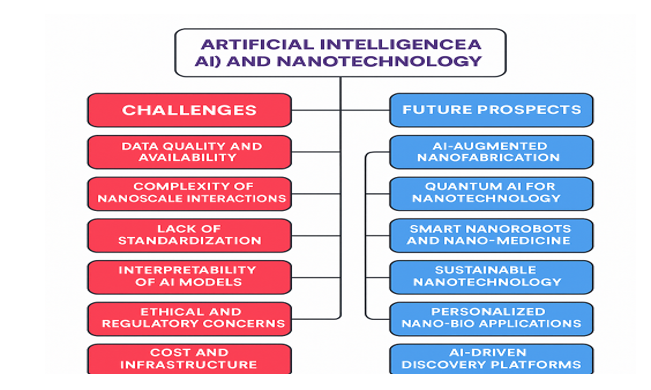
Table 2 and 3 highlight the challenges and future prospects of AI and nanotechnology:
TABLE 2: Challenges For AI and Nanotechnology
Challenges | Description | Impact |
Data Quality and Availability | Nanotech needs high-resolution atomic/molecular data, but datasets are often noisy or incomplete. | Limits AI training and prediction accuracy. |
Complexity of Nanoscale Interactions | Nanoscale phenomena are governed by quantum mechanics, which are hard to model using traditional AI. | Requires quantum ML and advanced simulation methods. |
Lack of Standardization | No unified data protocols or formats exist across institutions. | Reduces interoperability and reproducibility of AI models. |
Interpretability of AI Models | Many AI models function as black boxes, giving no insight into their reasoning. | Limits trust in safety-critical areas like nano-medicine. |
Ethical and Regulatory Concerns | Concerns over privacy, safety, and legality in AI-powered nanodevices. | Absence of global governance limits responsible innovation. |
Cost and Infrastructure | Requires expensive HPC systems, quantum simulators, and cleanroom labs. | Developing nations face economic and technical barriers. |
TABLE 3: Future Prospects for AI and Nanotechnology
Future Prospects | Opportunities | Applications/Outcomes |
AI-Augmented Nanofabrication | Automation of nanoscale manufacturing using AI. | Mass production of nanodevices with fewer defects. |
Quantum AI for Nanotechnology | AI combined with quantum computing to simulate atomic-level behaviours. | Enables discovery of new materials and atomic structures. |
Smart Nanorobots & Nano-Medicine | AI-controlled nanorobots for medical diagnostics and treatment. | Targeted drug delivery, autonomous surgical procedures. |
Sustainable Nanotechnology | Design of eco-friendly materials using AI models. | Applications in energy storage, pollution control, water purification. |
Personalized Nano-Bio Applications | Integration of patient data with AI-designed nanodevices. | Tailored diagnostics and precision therapies in healthcare. |
AI-Driven Discovery Platforms | Self-learning robotic systems that discover and test materials autonomously. | Accelerates material discovery cycles, reduces human intervention. ²⁵,³⁹ |
Conclusion
The convergence of Artificial Intelligence (AI) and nanotechnology marks a transformative era in science and technology, with far-reaching implications across fields such as medicine, materials science, environmental sustainability, and beyond. By leveraging AI’s computational power and nanotechnology’s precision, this interdisciplinary integration allows for unprecedented advancement - from designing atom-level materials and nanorobots for targeted drug delivery to creating intelligent systems for environmental remediation.
AI enhances nanotechnology through design optimization, rapid material discovery, prototyping, and personalized nano-biomedical applications. For instance, AI-augmented nanofabrication is enabling the production of highly sophisticated nanodevices, while machine learning algorithms support faster and more efficient material synthesis. Moreover, nanotechnology helps AI by facilitating the development of next-generation nanoscale processors and sensors, contributing to the evolution of hardware for AI systems.
Despite these innovations, the merging of AI and nanotech presents a range of challenges. Data scarcity, scale incompatibility, high computational demands, lack of standardized protocols, and the opaque nature of AI models all pose significant obstacles. Additionally, ethical, regulatory, and infrastructural constraints continue to hamper the widespread deployment of AI-driven nanotechnologies, especially in developing regions.
Looking forward, the integration of quantum computing with AI - termed quantum machine learning - holds promise for addressing nanoscale complexities with greater accuracy. Likewise, the emergence of autonomous labs and AI-driven discovery platforms is set to revolutionize research productivity, making the process faster, more cost-effective, and reproducible.
In summary, whilst the integration of AI and nanotechnology faces technological, ethical, and infrastructural challenges, its potential to revolutionize multiple sectors cannot be overstated. With continued interdisciplinary collaboration, investments in infrastructure, and ethical foresight, this synergy could drive a new age of innovation defined by smart, scalable, and sustainable solutions to some of humanity’s most pressing problems.
References
[1] Fortune Journals. (2024). The Impact of Artificial Intelligence on Innovative Nanotechnologies for Advanced Medical Diagnosis. Retrieved from https://cdn.fortunejournals.com/articles/the-impact-of-artificial-intelligence-on-innovative.pdf
[2] IJRPR. (n.d.). Integration of Artificial Intelligence in Nanotechnology: Transforming Industries and Advancing Innovation. Retrieved from https://ijrpr.com/uploads/V6ISSUE2/IJRPR39196.pdf
[3] PhilArchive. (n.d.). Convergence of Nanotechnology and Artificial Intelligence: Revolutionizing Healthcare and Beyond. Retrieved from https://philarchive.org/archive/ELHGAI
[4] Nanografi. (2025). The Power of Artificial Intelligence and Nanotechnology in Medicine. Retrieved from https://shop.nanografi.com/blog/the-power-of-artificial-intelligence-and-nanotechnology-in-medicine/
[5] BYOL Academy. (n.d.). Nanotechnology and Its Implications with Artificial Intelligence. Retrieved from https://byolacademy.com/stem/2327/nanotechnology-and-its-implications-with-artificial-intelligence/
[6] IJSRET. (2019). Artificial Intelligence and Nanotechnology Convergence. Retrieved from https://ijsret.com/wp-content/uploads/2019/12/IJSRET_V5_issue6_586.pdf
[7] Bhattacharyya, R., et al. (2018). Carbon Nanotube Transistors for Next-Generation AI Chips. Nature Electronics, 1(2), 82–89. https://doi.org/10.1038/s41928-018-0023-3
[8] Chen, W., et al. (2020). High-performance CNT-FETs for Neuromorphic Systems. IEEE Transactions on Nanotechnology, 19(3), 430–438. https://doi.org/10.1109/TNANO.2020.2985367
[9] Kumar, A., et al. (2021). Nanosensors for Artificial Intelligence-based Biomedical Monitoring. Sensors and Actuators B: Chemical, 330, 129330. https://doi.org/10.1016/j.snb.2020.129330
[10] Chhowalla, M., et al. (2016). The Chemistry of Two-Dimensional Layered Transition Metal Dichalcogenide Nanosheets. Nature Chemistry, 8, 191–201. https://doi.org/10.1038/nchem.2430
[11] Wang, Z., et al. (2018). Memristors with Nanoscale Materials for Brain-Inspired Computing. Nature Reviews Materials, 3(10), 1–19. https://doi.org/10.1038/s41578-018-0002-z
[12] reskill, J. (2018). Quantum Computing in the NISQ era and beyond. Quantum, 2, 79. https://doi.org/10.22331/q-2018-08-06-79
[13] LeCun, Y., Bengio, Y., & Hinton, G. (2015). Deep learning. Nature, 521(7553), 436–444. https://doi.org/10.1038/nature14539
[14] Sutton, R. S., & Barto, A. G. (2018). Reinforcement Learning: An Introduction (2nd ed.). MIT Press.
[15] Goodfellow, I., Bengio, Y., & Courville, A. (2016). Deep Learning. MIT Press.
[16] Russell, S., & Norvig, P. (2020). Artificial Intelligence: A Modern Approach (4th ed.). Pearson.
[17] Molesky, S., Lin, Z., Piggott, A. Y., Jin, W., Vucković, J., & Rodriguez, A. W. (2018).Inverse design in nanophotonics. Nature Photonics, 12(11), 659–670.https://doi.org/10.1038/s41566-018-0246-9
[18] Jha, D., Ward, L., Paul, A., Liao, W.-K., Choudhary, A., Wolverton, C., & Agrawal, A. (2018).
ElemNet: Deep learning the chemistry of materials from only elemental composition.
Scientific Reports, 8(1), 17593.https://doi.org/10.1038/s41598-018-35934-y.
[19] Materials Project (Jain et al., 2013)Commentary: The Materials Project: A materials genome approach to accelerating materials innovation.APL Materials, 1(1), 011002.https://doi.org/10.1063/1.4812323
[20] Ghosh, S., Mahata, A., Ghosh, S., & Jana, N. R. (2020).Artificial intelligence in nanoscale materials discovery and design: Promises and challenges.ACS Omega, 5(36), 22940-22949.https://doi.org/10.1021/acsomega.0c03191
[21] Zhou, Y., & Lu, Y. (2021).Artificial intelligence in nanomedicine: Boosting precision medicine with nanotechnology and AI.Wiley Interdisciplinary Reviews: Nanomedicine and Nanobiotechnology, 13(5), e1712.https://doi.org/10.1002/wnan.1712
[22] Tang, B., He, Y., Liu, L., & Wang, X. (2018).AI-aided design and synthesis of environmental nanomaterials for pollution control and resource recovery. Environmental Science: Nano, 5(9), 2045–2059.https://doi.org/10.1039/C8EN00555E
[23] Krenn, M., et al. (2020).Self-learning machines for material discovery.Nature Reviews Materials, 6(5), 422–439.https://doi.org/10.1038/s41578-020-00233-y
[24] Yao, Y., et al. (2021).Robotic platform for the design and discovery of 2D materials.Nature, 593(7860), 67–73.https://doi.org/10.1038/s41586-021-03473-9
[25] Butler, K. T., Davies, D. W., Cartwright, H., Isayev, O., & Walsh, A. (2018). Machine learning for molecular and materials science. Nature, 559(7715), 547–555.
[26] Jablonka, K. M., Ongari, D., Moosavi, S. M., & Smit, B. (2021). Big-data science in porous materials: Materials genomics and machine learning. Chemical Reviews, 121(16), 10173–10285.
[27] Biamonte, J., Wittek, P., Pancotti, N., Rebentrost, P., Wiebe, N., & Lloyd, S. (2017). Quantum machine learning. Nature, 549(7671), 195–202. https://doi.org/10.1038/nature23474
[28] Chen, C., Zuo, Y., Ye, W., & Ong, S. P. (2021). Data challenges and opportunities in materials science: The roles of data repositories and machine learning. Nature Reviews Materials, 6(4), 277–287. https://doi.org/10.1038/s41578-020-00264-1
[29] Davies, M. (2020). Building the AI infrastructure for scientific discovery. Nature Machine Intelligence, 2(10), 531–533. https://doi.org/10.1038/s42256-020-00250-3
[30] Faria, R. P., Rocha, L. A., & Silva, H. G. (2021). Machine learning in nanomanufacturing: From process monitoring to material discovery. Advanced Intelligent Systems, 3(2), 2000140. https://doi.org/10.1002/aisy.202000140
[31] Häse, F., Roch, L. M., & Aspuru-Guzik, A. (2019). Next-generation experimentation with self-driving laboratories. Trends in Chemistry, 1(3), 282–291. https://doi.org/10.1016/j.trechm.2019.02.007
[32] Jobin, A., Ienca, M., & Vayena, E. (2019). The global landscape of AI ethics guidelines. Nature Machine Intelligence, 1, 389–399. https://doi.org/10.1038/s42256-019-0088-2
[33] Krishnan, S. G., Suresh, A., & Thomas, S. (2022). Green nanotechnology: Challenges and solutions. ACS Sustainable Chemistry & Engineering, 10(5), 1503–1512. https://doi.org/10.1021/acssuschemeng.1c05674
[34] Li, J., Esteban-Fernández de Ávila, B., Gao, W., Zhang, L., & Wang, J. (2017). Micro/nanorobots for biomedicine: Delivery, surgery, sensing, and detoxification. Science Robotics, 2(4), eaam6431. https://doi.org/10.1126/scirobotics.aam6431
[35] Liu, Y., Zhao, T., Ju, W., & Shi, S. (2020). Machine learning for quantum mechanical properties of molecules and materials. Chemical Reviews, 120(12), 5810–5870. https://doi.org/10.1021/acs.chemrev.9b00757
[36] Raccuglia, P., Elbert, K. C., Adler, P. D. F., et al. (2016). Machine-learning-assisted materials discovery using failed experiments. Nature, 533(7601), 73–76. https://doi.org/10.1038/nature17439
[37] Rudin, C. (2019). Stop explaining black box machine learning models for high stakes decisions and use interpretable models instead. Nature Machine Intelligence, 1(5), 206–215. https://doi.org/10.1038/s42256-019-0048-x
[38] Wilkinson, M. D., Dumontier, M., Aalbersberg, I. J., et al. (2016). The FAIR Guiding Principles for scientific data management and stewardship. Scientific Data, 3, 160018. https://doi.org/10.1038/sdata.2016.18
[39] Zhang, L., Gu, F. X., Chan, J. M., Wang, A. Z., Langer, R. S., & Farokhzad, O. C. (2008). Nanoparticles in medicine: Therapeutic applications and developments. Clinical Pharmacology & Therapeutics, 83(5), 761–769. https://doi.org/10.1038/sj.clpt.6100400
[40] Zunger, A. (2018). Practical inverse design in materials science. Nature Reviews Chemistry, 2(10), 0121. https://doi.org/10.1038/s41570-018-0121
[41] Chen, C., Zuo, Y., Ye, W., & Ong, S. P. (2021). Data challenges and opportunities in materials science: The roles of data repositories and machine learning. Nature Reviews Materials, 6(4), 277–287. https://doi.org/10.1038/s41578-020-00264-1
[42] Liu, Y., Zhao, T., Ju, W., & Shi, S. (2020). Machine learning for quantum mechanical properties of molecules and materials. Chemical Reviews, 120(12), 5810–5870. https://doi.org/10.1021/acs.chemrev.9b00757
[43] Davies, M. (2020). Building the AI infrastructure for scientific discovery. Nature Machine Intelligence, 2(10), 531–533. https://doi.org/10.1038/s42256-020-00250-3
[44] Wilkinson, M. D., et al. (2016). The FAIR Guiding Principles for scientific data management and stewardship. Scientific Data, 3, 160018. https://doi.org/10.1038/sdata.2016.18
[45] Rudin, C. (2019). Stop explaining black box machine learning models for high stakes decisions and use interpretable models instead. Nature Machine Intelligence, 1(5), 206–215. https://doi.org/10.1038/s42256-019-0048-x
[46] Jobin, A., Ienca, M., & Vayena, E. (2019). The global landscape of AI ethics guidelines. Nature Machine Intelligence, 1, 389–399. https://doi.org/10.1038/s42256-019-0088-2
Author Information
Authors: Falguni Kasera, Akanksha Dwivedi*, G.N. Darwhekar
Acropolis Institute of Pharmaceutical Education and Research, Indore-453771, M.P., India
Corresponding Author:
Dr. Akanksha Dwivedi
Email: Akd.pharma@gmail.com



Comments